
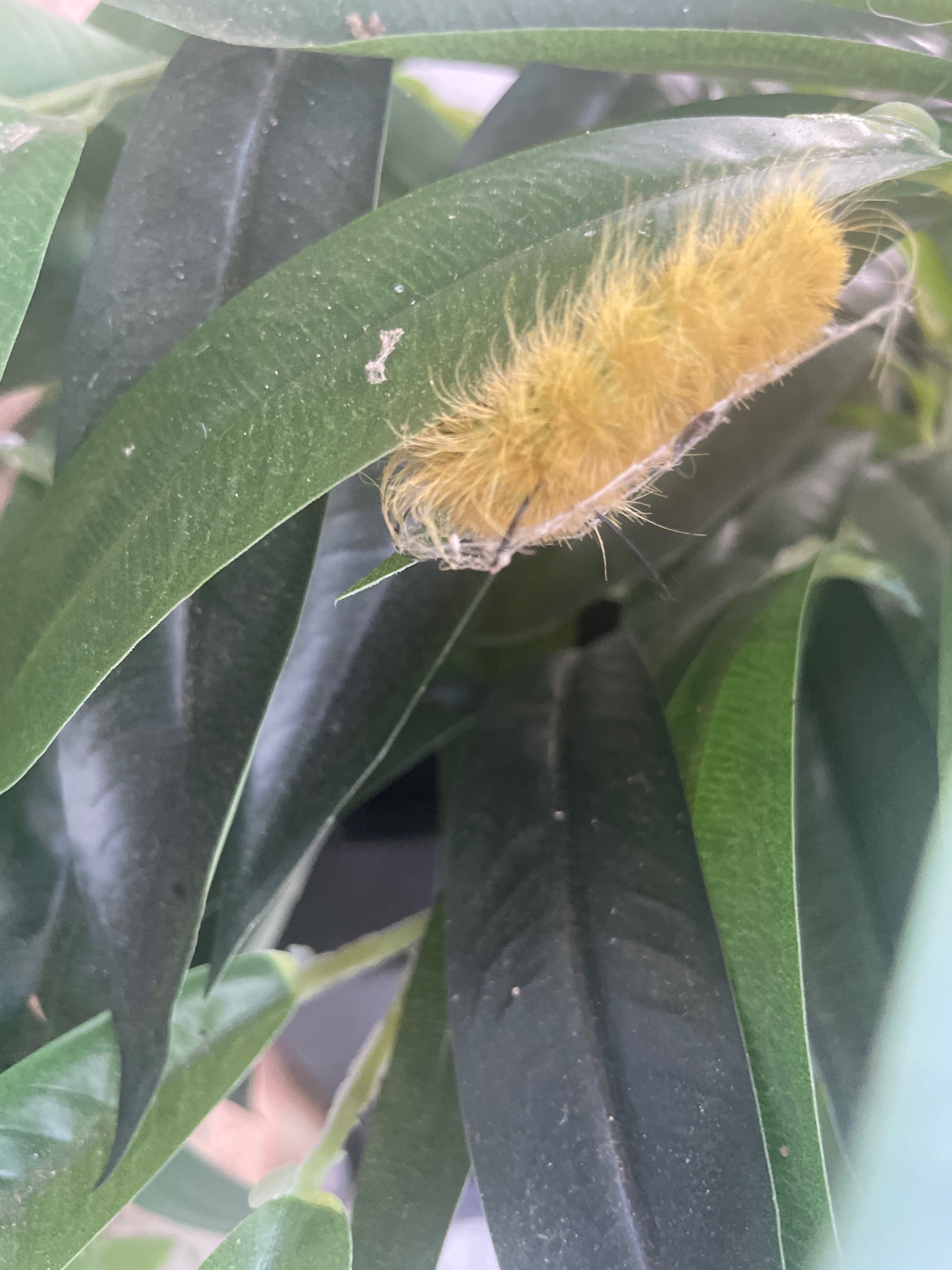
Community identification
Yellow tussock moth caterpillar (likely)
Lophocampa sp. (identification to species requires locality and clearer features)
- Order & Family
- Lepidoptera; family Erebidae, subfamily Arctiinae
- Size
- Typically about 25–40 mm long when mature; this individual appears roughly 30–35 mm.
Natural Habitat
Found on foliage in gardens, woodland edges, and forests, especially on broad-leaved trees and shrubs.
Diet & Feeding
The caterpillar chews leaves, often feeding on willow, poplar, oak, maple, and various ornamental plants.
Behavior Patterns
Solitary, mostly foliage-dwelling larvae molt several times before spinning a cocoon and pupating. Its dense hairs can deter predators, though coloration varies among species.
Risks & Benefits
Hairs may cause skin or eye irritation in sensitive people, so avoid handling. Adults are pollinators or nectar-feeders, while larvae contribute to food webs and generally cause limited, localized leaf damage.