
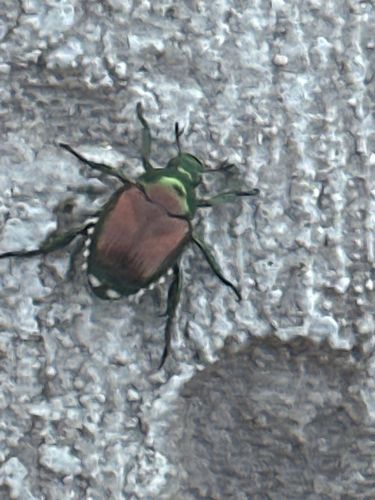
Japanese Beetle
Popillia japonica
- Order & Family
- Coleoptera, Scarabaeidae (Scarab beetles)
- Size
- Adults typically measure 8-15 mm (0.3-0.6 inches) in length.
Natural Habitat
Found in urban and suburban landscapes, agricultural fields, orchards, gardens, nurseries, and golf courses, wherever suitable host plants and turf are present.
Diet & Feeding
Adults are voracious polyphagous feeders, consuming over 300 species of plants, including roses, grapes, fruit trees, and ornamental plants, skeletonizing leaves. Larvae (grubs) feed on the roots of turfgrass, vegetables, and other plants.
Behavior Patterns
Adults are active during the day, especially in warm, sunny weather. They are strong flyers and attracted to light. Larvae (grubs) live underground and feed on roots, often curling into a 'C' shape. Adults emerge from the soil in early summer and feed for about 30-45 days. Females lay eggs in the soil, and larvae hatch in mid to late summer, feeding until fall when they burrow deeper to overwinter.
Risks & Benefits
Potential risks: Japanese beetles are serious agricultural and horticultural pests. Both adults and larvae can cause significant damage to crops, ornamental plants, and turf. Their feeding can lead to defoliation, reduced yields, and plant death. They have no significant benefits beyond being part of the food chain for certain predators, but their invasive nature outweighs any minor ecological benefits.