
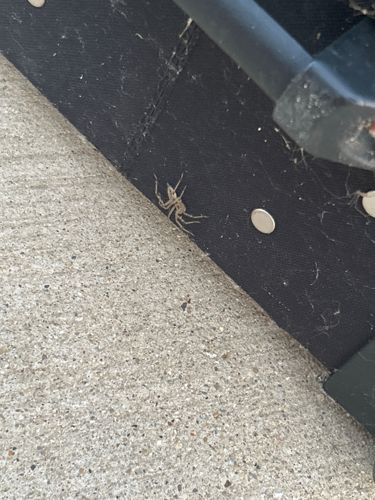
Cellar Spider (or Daddy Long Legs, though this term is also used for harvestmen)
Pholcus phalangioides
- Order & Family
- Order: Araneae, Family: Pholcidae
- Size
- Body length typically 2-10 mm; leg span can be much larger, up to 5-7 cm (2-3 inches).
Natural Habitat
Cellar spiders are commonly found indoors in cool, dark, and damp places such as basements, cellars, crawl spaces, garages, sheds, and closets. They can also be found outdoors in sheltered areas like under rocks, logs, or eaves.
Diet & Feeding
Cellar spiders primarily eat other insects and spiders. They are known to hunt and consume other spiders, including larger, more dangerous species like black widows and hobo spiders, by wrapping them in silk and then biting them. They will also catch flies, mosquitoes, and other small arthropods that get tangled in their webs.
Behavior Patterns
Cellar spiders are known for building irregular, messy webs in corners of rooms, basements, and other undisturbed areas. They are often seen hanging upside down in their webs. When disturbed, they may vibrate their web rapidly, making themselves blurry and harder for predators to catch. They are generally nocturnal.
Risks & Benefits
Cellar spiders are generally harmless to humans. Their fangs are very small, and their venom, if any is injected, is not considered medically significant. There is a common urban legend that they are extremely venomous but cannot bite humans, which is false; while they can bite, their venom is mild. The primary benefit of cellar spiders is their role as natural pest control. They prey on a variety of nuisance insects and even other spiders, including those that might be considered more dangerous or undesirable in a home environment.