
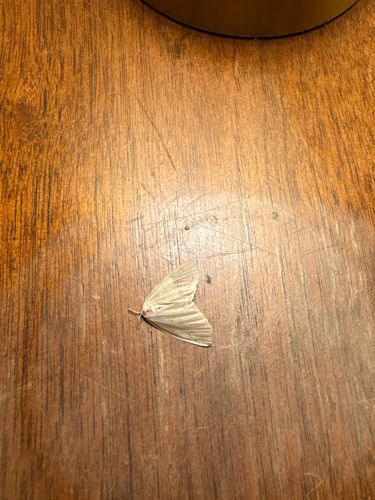
Moth (likely a Geometer Moth or a similar small, pale moth)
Difficult to determine exact species from this image; could be in genera like "Scopula" or "Idaea"
- Order & Family
- Order: Lepidoptera, Family: Geometridae (or a related family with similar appearance)
- Size
- Typically small to medium-sized, with a wingspan ranging from 1.5 cm to 5 cm, depending on the specific species.
Natural Habitat
Widely diverse, including forests, grasslands, gardens, agricultural fields, and urban areas, depending on the specific species and its host plants.
Diet & Feeding
Adult moths often feed on nectar from flowers, decaying fruit, or sap, though some species may not feed at all as adults. Larvae (caterpillars) are typically herbivorous, feeding on specific plant leaves.
Behavior Patterns
Moths are typically nocturnal, active during the night. They are attracted to light sources. Their caterpillars are often found on host plants. Adults generally live for a short period, focusing on reproduction.
Risks & Benefits
Generally harmless to humans. Some species' larvae can be agricultural or garden pests by feeding on crops or ornamental plants. As adults, they play a role in pollination. Many species are an important food source for birds, bats, and other insectivores.