
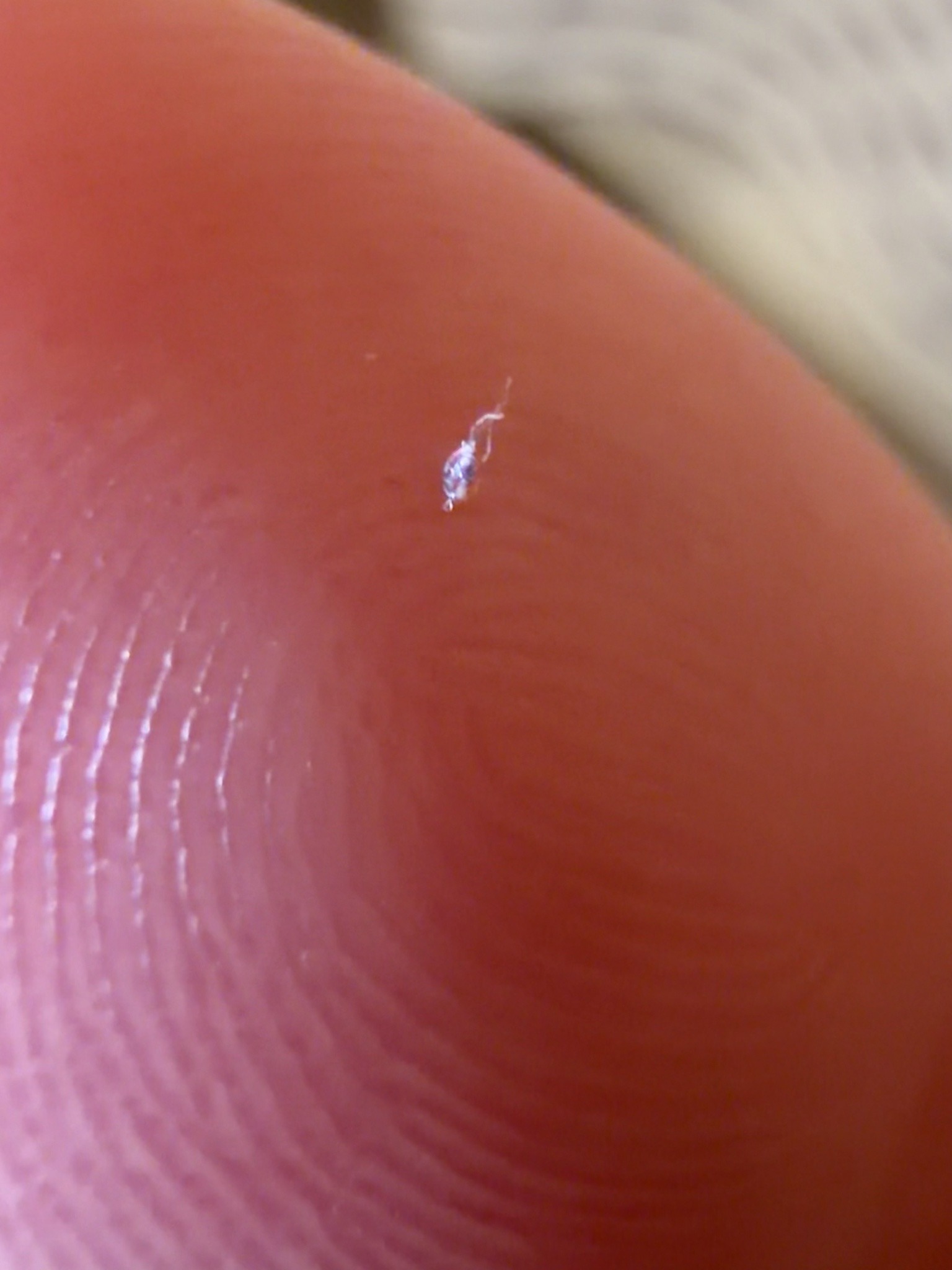
Springtail (likely globular springtail)
Collembola; exact species cannot be determined from the image
- Order & Family
- Order Collembola; family likely Sminthuridae or related globular springtails
- Size
- Usually 0.5–6 mm long; this individual appears only a few millimeters or less.
Natural Habitat
Moist soil, leaf litter, decaying vegetation, compost, and the damp edges of buildings. They may appear indoors around bathrooms, houseplants, or wet organic material.
Diet & Feeding
Feeds primarily on fungi, algae, bacteria, decaying plant matter, and microscopic organic debris. It does not bite or parasitize humans.
Behavior Patterns
Often moves by hopping using a forked appendage called a furcula, though globular forms may crawl or jump less dramatically. Populations increase in damp conditions and decline when habitats dry.
Risks & Benefits
Harmless to people, pets, and structures; occasional indoor numbers indicate excess moisture rather than infestation. They help decompose organic matter and recycle nutrients, though some species can damage seedlings in very large populations.