
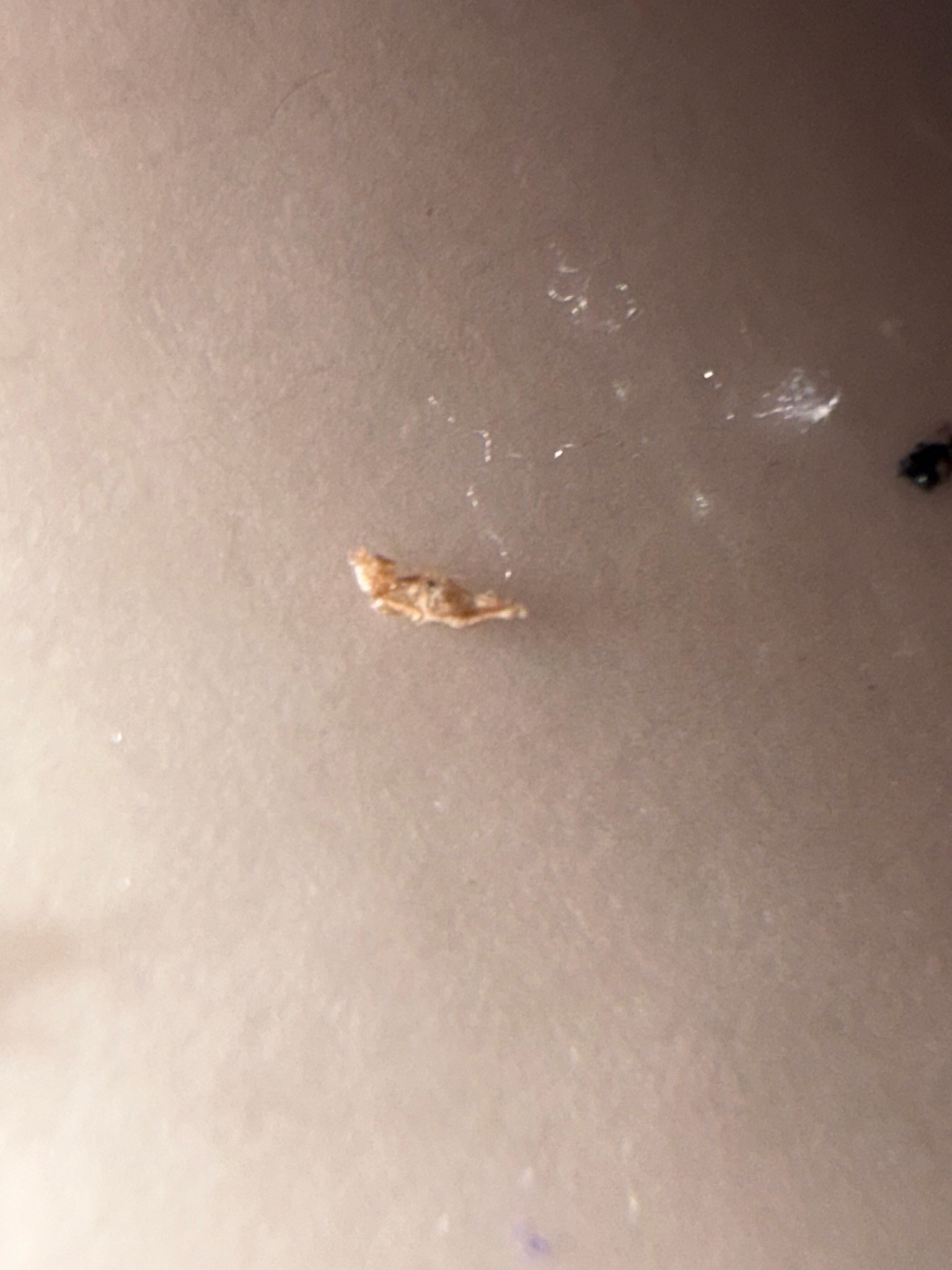
Community identification
Unidentified small larva (likely clothes moth larva)
Tineola bisselliella (probable)
- Order & Family
- Lepidoptera; family Tineidae
- Size
- Larvae are typically 6–10 mm long; the pictured specimen appears within this range.
Natural Habitat
Dark, undisturbed indoor areas such as closets, carpets, upholstery, and stored textiles. They often occur where lint, hair, or natural fibers accumulate.
Diet & Feeding
Feeds mainly on keratin-containing materials, including wool, fur, feathers, hair, and silk, plus lint and organic debris. Adults generally do not feed.
Behavior Patterns
Larvae avoid light and may wander from feeding sites before pupating; they produce silk, webbing, or portable cases depending on species. Adults are small, weak-flying moths.
Risks & Benefits
They are not dangerous to people and do not bite, sting, or transmit disease. Larvae can damage natural-fiber clothing, carpets, and taxidermy; ecological benefit is limited to decomposing animal-derived material.