
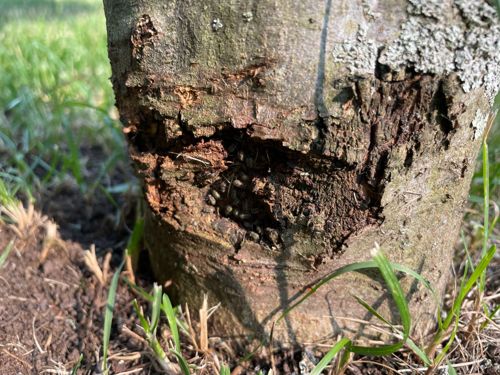
Gypsy Moth Caterpillar (Fecal Pellets/Frass)
Lymantria dispar (Refers to the insect that produces the frass)
- Order & Family
- Lepidoptera (Order), Erebidae (Family)
- Size
- The individual fecal pellets (frass) visible in the image are typically 1-3 mm in diameter. The caterpillars themselves, which produce this frass, can range from a few millimeters when newly hatched to up to 60-75 mm (2.5-3 inches) when fully grown.
Natural Habitat
The caterpillars themselves are found on host trees in forests, woodlands, orchards, and urban/suburban landscapes. The frass (fecal pellets) seen in the image would accumulate at the base of trees or in bark crevices where the caterpillars are actively feeding above.
Diet & Feeding
The caterpillars are polyphagous, feeding on the leaves of a wide variety of deciduous and coniferous trees and shrubs. Preferred hosts include oak, birch, apple, and willow. The image primarily shows their fecal pellets (frass), which are an indication of their feeding activity.
Behavior Patterns
Gypsy moth caterpillars are known for their voracious appetites, defoliating trees during outbreaks. They are most active from late May to mid-July. Larvae typically feed at night during the last instars and hide on the tree trunk or in bark crevices during the day. Pupation occurs in crevices or on the bark, with adults emerging later in the summer to mate and lay eggs. The eggs overwinter in masses on tree bark, rocks, or other protected surfaces, typically hatching in spring.
Risks & Benefits
Risks: Gypsy moth caterpillars are a significant invasive pest in North America. Outbreaks can lead to severe defoliation of trees, weakening them and making them susceptible to other stresses, disease, and ultimately tree mortality. They can cause significant economic damage in forestry and can be an aesthetic nuisance in residential areas due to their numbers, frass, and silken threads. Potential for allergic reactions (skin irritation, rashes) from contact with their hairs. Benefits: In their native range, they are part of the natural ecosystem; however, as an invasive species in North America, their impact is overwhelmingly negative.