
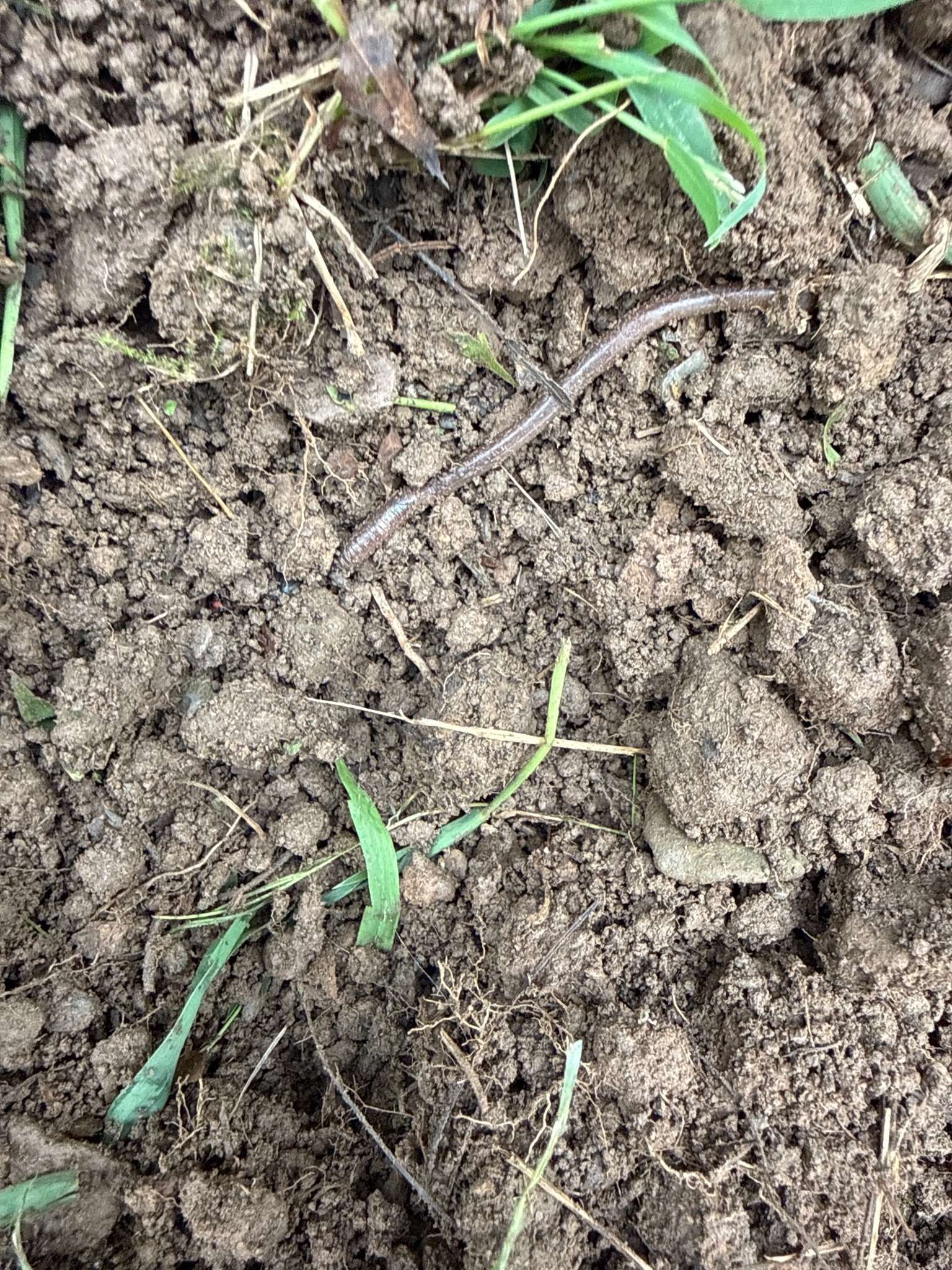
Community identification
Earthworm
Likely *Lumbricus* or *Aporrectodea* species
- Order & Family
- Haplotaxida; Lumbricidae
- Size
- Typically 5–20 cm long; introduced garden species can occasionally exceed 25 cm.
Natural Habitat
Moist, organically rich soil, gardens, lawns, compost, and leaf litter. This individual is exposed in freshly disturbed ground.
Diet & Feeding
Consumes decaying leaves, plant residues, microorganisms, and soil organic matter, passing soil through its digestive tract.
Behavior Patterns
Burrows through soil, usually avoiding light and drying conditions. Hermaphroditic adults mate with one another and produce cocoons; activity increases after rain or during damp nights.
Risks & Benefits
Generally harmless to people and pets. Earthworms improve soil aeration, drainage, nutrient cycling, and aggregation, though some nonnative species can alter forest-soil ecosystems.