
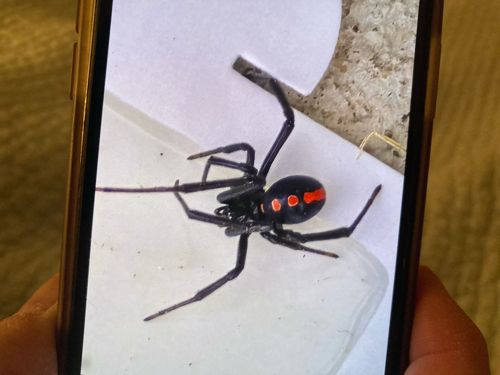
Southern Black Widow
Latrodectus mactans
- Order & Family
- Order: Araneae, Family: Theridiidae (Cobweb Spiders)
- Size
- Female body length: 12-16 mm (0.47-0.63 in); leg span up to 38 mm (1.5 in). Males are considerably smaller, about half the size of females.
Natural Habitat
Found in various sheltered, undisturbed places, including woodpiles, sheds, garages, stone walls, under rocks, in hollow logs, and sometimes in cluttered basements or crawl spaces of homes. They prefer dark, dry areas.
Diet & Feeding
Primarily consumes insects such as flies, mosquitoes, grasshoppers, beetles, and caterpillars. They may also prey on other arachnids.
Behavior Patterns
Black widows are primarily nocturnal, building irregular, tangled webs, often near the ground in sheltered locations. Females are known for their reclusive nature and are rarely aggressive unless their web or egg sac is disturbed. The common name 'widow' comes from the female's occasional habit of consuming the male after mating, though this is less common in natural settings than in captivity. They paralyze prey with venom and then wrap it in silk before consuming.
Risks & Benefits
Risks: The Southern Black Widow's bite is medically significant due to its potent neurotoxic venom (latrotoxin). While rarely fatal for healthy adults, a bite can cause severe muscle pain, cramps, nausea, sweating, tremors, and hypertension, a condition known as latrodectism. Medical attention is recommended for bites, especially for children, the elderly, or individuals with pre-existing health conditions. Benefits: As predators, they help control insect populations, including some pest species.