
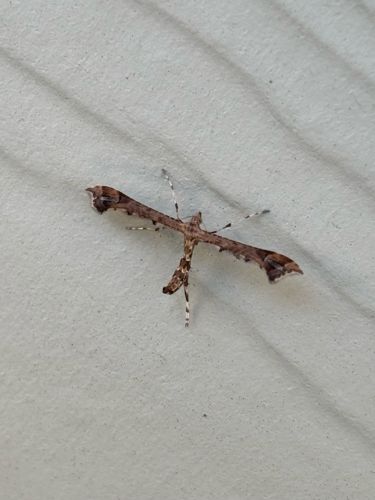
Plume Moth
Pterophoridae (a family, as exact species is hard to determine from the image alone)
- Order & Family
- Order: Lepidoptera, Family: Pterophoridae
- Size
- Wingspan typically ranges from 15 mm to 40 mm, with the body length varying accordingly, usually slender.
Natural Habitat
Plume moths are found in a wide variety of habitats where their host plants grow, including gardens, meadows, forests, grasslands, and agricultural fields. They are widespread globally.
Diet & Feeding
Adult plume moths typically do not feed or feed on nectar. Their larvae are herbivorous, feeding on the leaves, flowers, seeds, or stems of various plants, depending on the species. Many species are host-plant specific.
Behavior Patterns
Plume moths are primarily nocturnal, attracted to lights at night. During the day, they often rest with their wings spread out at right angles to their body, giving them a distinctive 'T' shape, which aids in their camouflage to resemble dried leaves or twigs. Their flight is often described as erratic or fluttering. Larvae are typically slow-moving and feed openly on their host plants. Some species are known to cause galls.
Risks & Benefits
Generally, plume moths pose minimal risks to humans. While some larval species can be considered minor pests in agriculture or horticulture due to feeding on crops (e.g., artichokes, sunflowers, some ornamental plants), significant damage is rare. Ecologically, they serve as pollinators for some plants and are part of the food chain, providing food for birds and other predators.