
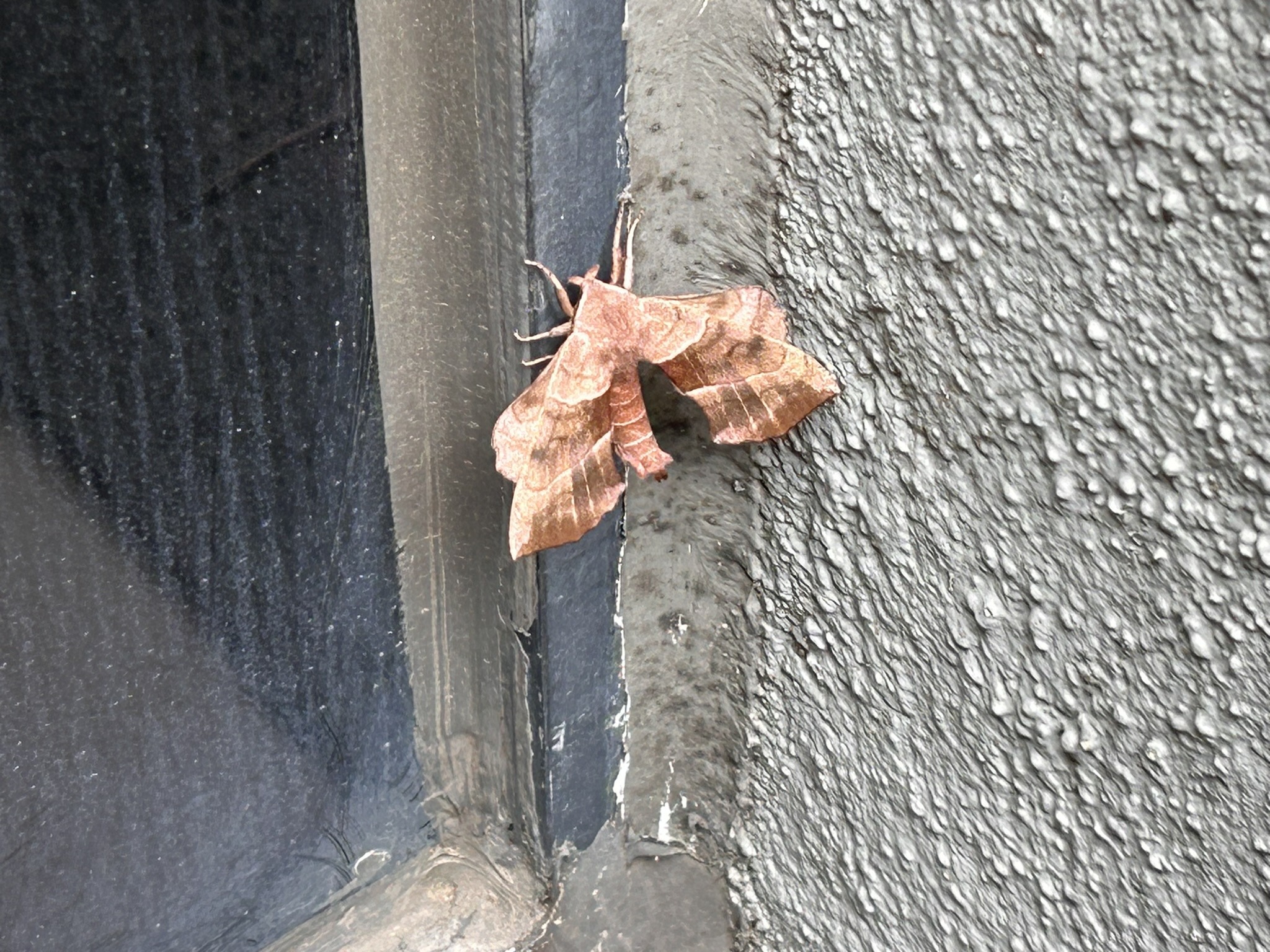
Community identification
Blinded Sphinx Moth
Paonias excaecata
- Order & Family
- Lepidoptera: Sphingidae
- Size
- Wingspan typically ranges from 5.5 to 9.5 centimeters (2.2 to 3.7 inches).
Natural Habitat
Deciduous forests, edge habitats, suburban gardens, and shrubby areas across North America.
Diet & Feeding
Caterpillars feed on leaves of various trees and shrubs including willow, birch, cherry, and oak. Adults do not feed, as they have vestigial mouthparts.
Behavior Patterns
Night-flying (nocturnal) and attracted to lights. They are known for their defensive display: when disturbed, they reveal 'eyespots' on their hindwings to startle predators. They undergo complete metamorphosis.
Risks & Benefits
Harmless to humans; no sting or bite. Benefits the ecosystem as a food source for bats and birds; caterpillars have negligible impact on healthy trees.