
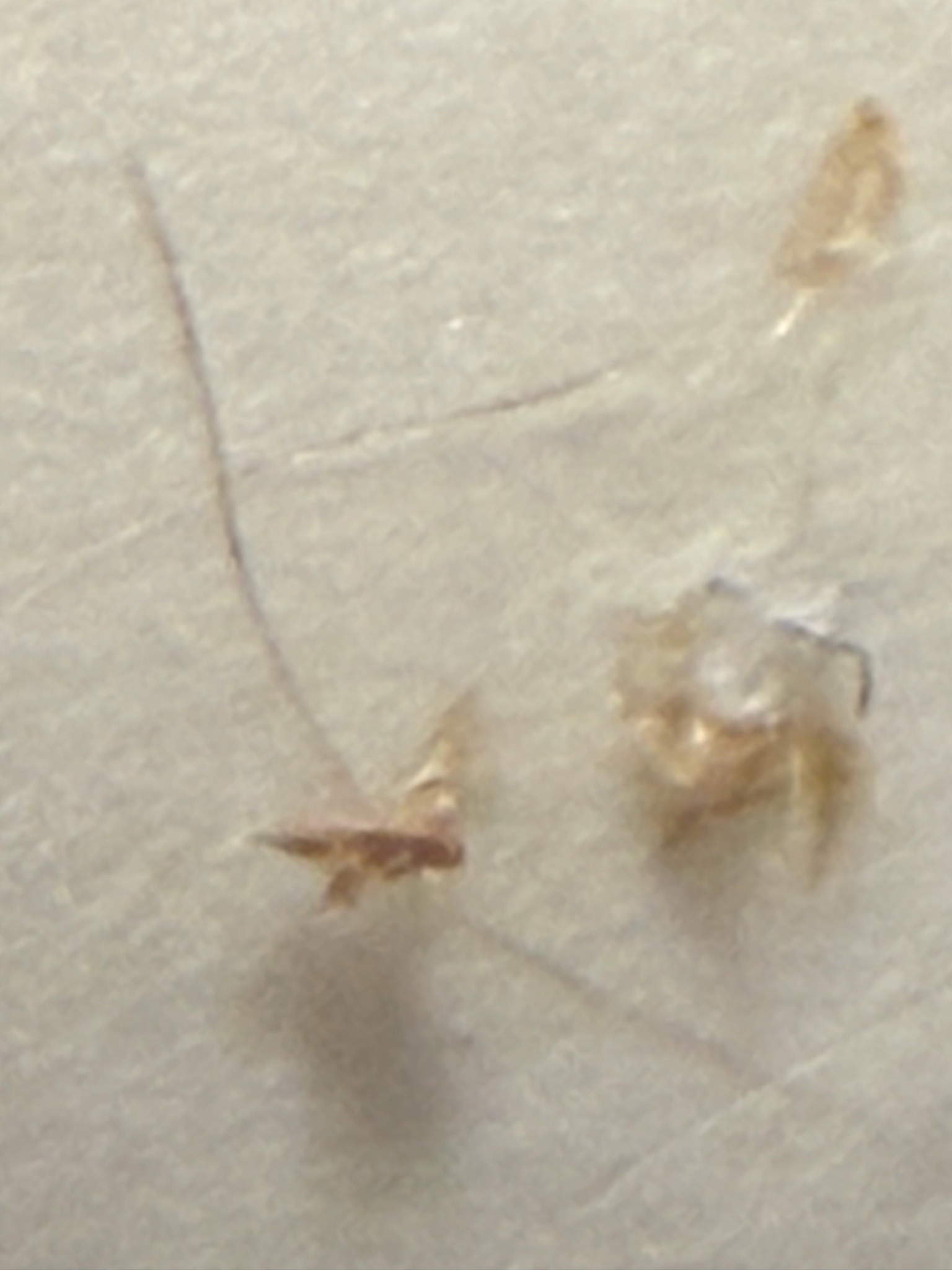
Community identification
Booklouse (psocid), likely a winged form
Liposcelis sp. (identification uncertain from image)
- Order & Family
- Psocodea; Liposcelididae
- Size
- About 0.8–2 mm long; the pictured appendages may make it appear larger.
Natural Habitat
Damp indoor areas, especially beneath wallpaper, in stored books, cardboard, and dusty crevices; also leaf litter outdoors.
Diet & Feeding
Feeds mainly on mold, fungi, algae, starches, and microscopic organic debris rather than blood or living tissue.
Behavior Patterns
Often occurs in humid, poorly ventilated places and may reproduce rapidly by parthenogenesis. It is wingless in many species, though winged individuals can disperse when conditions change.
Risks & Benefits
Harmless to people and pets and does not bite or transmit disease. Large indoor populations indicate excess moisture and may contaminate or damage stored paper products, while outdoors it helps decompose organic matter.