
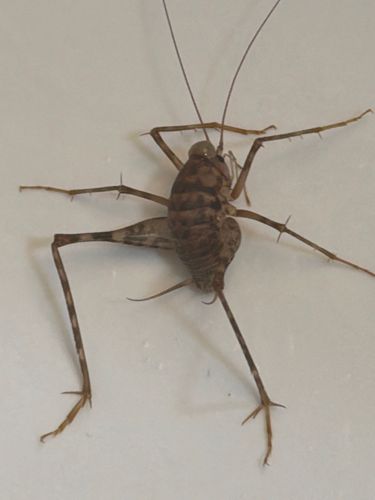
Camel Cricket, Cave Cricket, Spider Cricket
Ceuthophilus spp. (or other genera within Rhaphidophoridae)
- Order & Family
- Orthoptera, Rhaphidophoridae
- Size
- 1/2 to 1 1/2 inches (1.2 to 3.8 cm) in body length, not including their long legs and antennae.
Natural Habitat
Damp, dark environments such as caves, cellars, basements, crawl spaces, and under logs or stones. They prefer high humidity.
Diet & Feeding
Omnivorous scavengers. They feed on organic matter, fungi, plants, dead insects, fabric, and sometimes even other arthropods.
Behavior Patterns
Nocturnal and active primarily at night. They are wingless and cannot chirp like true crickets. When startled, they jump high and erratically. They are known for their long antennae and legs, which help them navigate in dark environments. They do not bite but can be a nuisance indoors.
Risks & Benefits
Potential risks: Can be a nuisance pest indoors, especially in basements and crawl spaces, where they might feed on fabrics, wood, or other stored goods. They do not transmit diseases or bite. Benefits: In natural ecosystems, they play a role in decomposition as scavengers, helping to break down organic matter.