
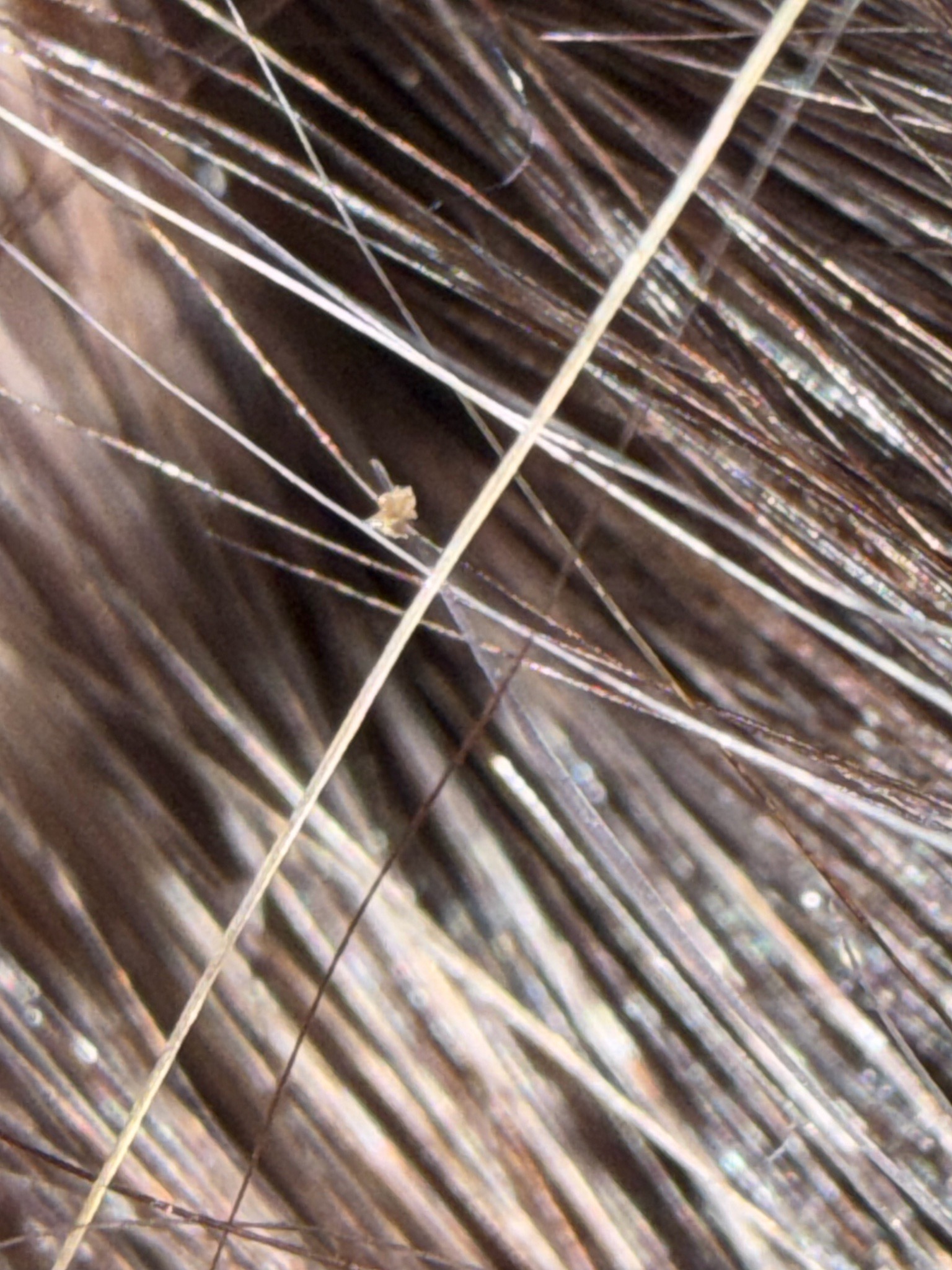
Community identification
Head louse (likely nymph)
Pediculus humanus capitis
- Order & Family
- Phthiraptera; Pediculidae
- Size
- Nymphs are about 0.8–2 mm; adults reach roughly 2–3 mm.
Natural Habitat
Human scalp hair, especially close to the scalp where warmth and blood meals are available.
Diet & Feeding
Feeds exclusively on human blood by piercing scalp skin several times daily.
Behavior Patterns
Wingless, flattened, and adapted for gripping hair; crawls rather than jumps or flies. Females cement oval eggs (nits) to hair shafts, and the life cycle takes about 3–4 weeks.
Risks & Benefits
Causes itching, irritation, and contagious infestations but is not known to transmit major diseases in typical head-louse infestations. Identification from this close-up is probable rather than definitive; the object may also be a louse nymph or debris.