
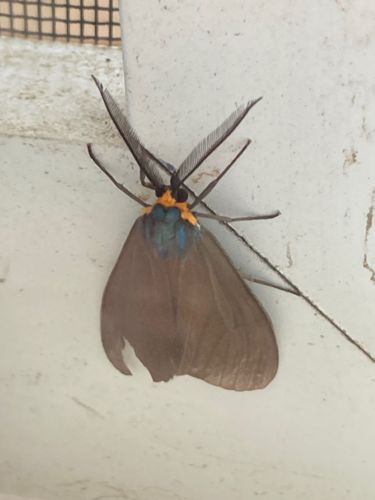
Rosy Maple Moth
Dryocampa rubicunda
- Order & Family
- Lepidoptera, Saturniidae
- Size
- Wingspan typically ranges from 32 to 55 mm (1.25 to 2.2 inches).
Natural Habitat
Deciduous forests, suburban areas, and anywhere maple trees are abundant, primarily in eastern North America.
Diet & Feeding
Adult rosy maple moths do not feed, as their mouthparts are vestigial (non-functional). They rely on energy reserves built up during the larval (caterpillar) stage. The caterpillars feed on the leaves of maple trees, including red maple, sugar maple, and silver maple, as well as sometimes on oak and beech.
Behavior Patterns
Adult males are often seen during the day, especially in the afternoon, as they actively search for females using their large, feathery antennae to detect pheromones. Females are often less active, especially during the day. This moth is univoltine (one generation per year).
Risks & Benefits
Generally beneficial due to its role in the ecosystem, particularly as a pollinator (though adults don't feed, they can transfer pollen inadvertently) and as a food source for birds and other insectivores. Caterpillars, while defoliating trees, rarely cause significant damage to healthy mature trees. No risks to humans.