
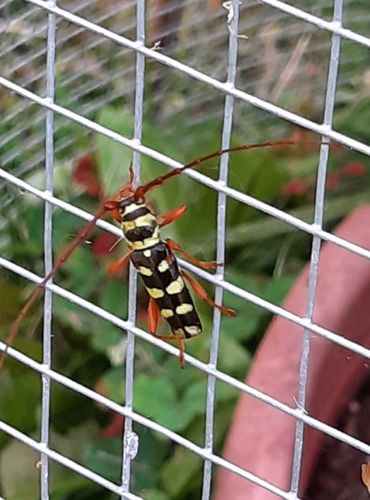
Longhorn Beetle (appears to be a Clytus species, possibly Wasp Beetle)
Cerambycidae (likely within genus Clytus or a related genus due to the wasp-like appearance)
- Order & Family
- Order: Coleoptera, Family: Cerambycidae
- Size
- Generally, longhorn beetles range from 1 to 8 cm (0.4 to 3.1 inches) in length, though the specific species in the image appears to be in the 1-2.5 cm range based on typical Clytus species.
Natural Habitat
Adults are found in areas with flowering plants, forests, woodlands, gardens, and near dead or dying trees where their larvae develop. Larvae live inside wood substrates.
Diet & Feeding
Adults primarily feed on nectar and pollen from flowers. Larvae (grubs) are xylophagous, meaning they bore into and feed on wood, either living, dead, or decaying. The specific wood preference varies by species.
Behavior Patterns
Adults are typically active during the day, feeding on pollen and nectar. They are strong fliers and can be found on various flowering plants. Larvae bore into wood, developing over one to three years depending on species, wood type, and environmental conditions. Some species mimic wasps in appearance and behavior to deter predators.
Risks & Benefits
Potential risks include damage to trees (especially by the larvae of some species which can infest live trees, timber, or structural wood) and crops in agricultural settings, although most species prefer dead or decaying wood. Benefits include their role as decomposers, breaking down dead wood, and adults act as pollinators by visiting flowers. They are generally not harmful to humans.