
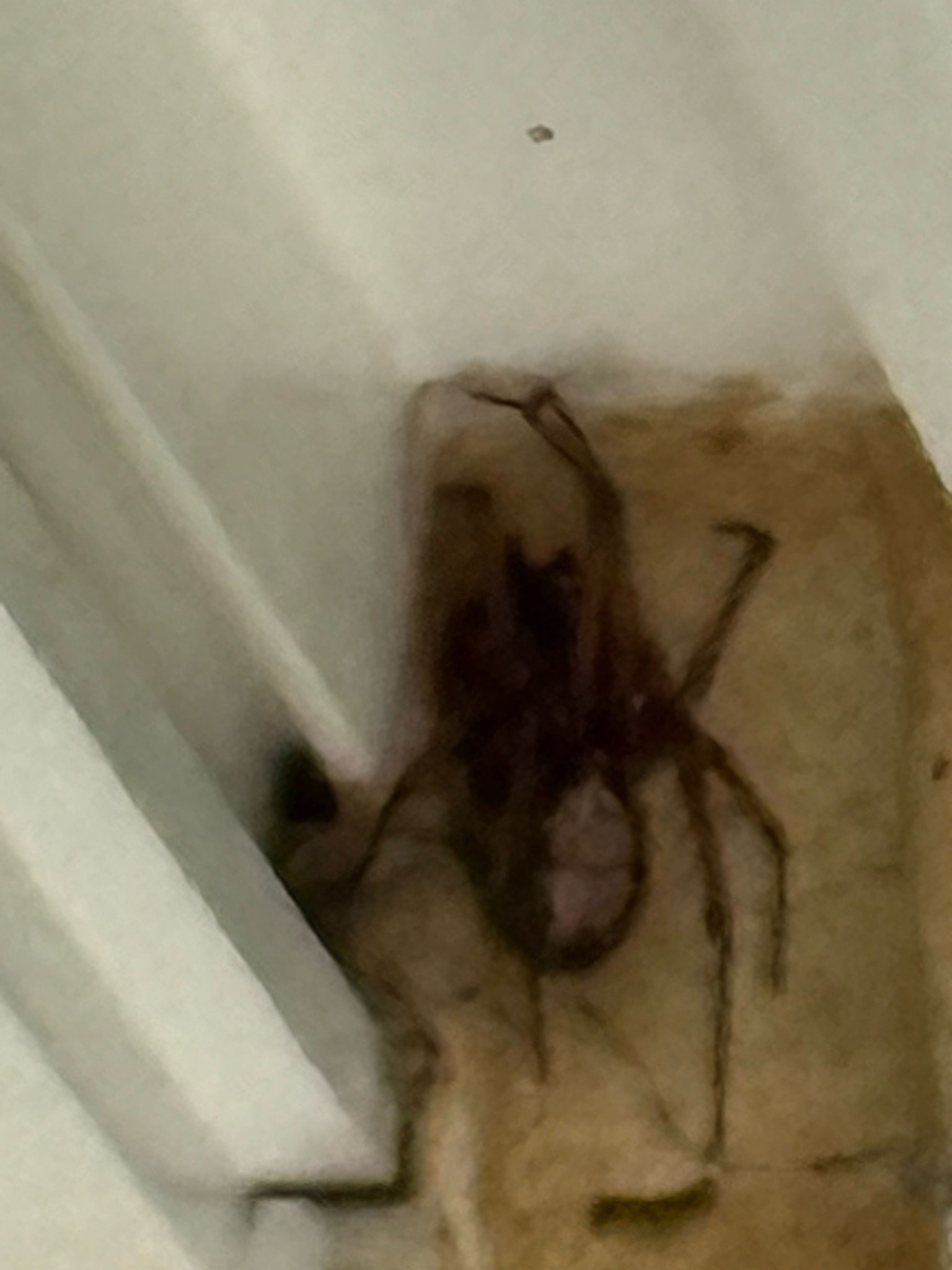
Community identification
Giant House Spider
Eratigena duellica
- Order & Family
- Araneae, Agelenidae
- Size
- Body length 10-18mm; leg span can reach up to 75mm-100mm (3-4 inches).
Natural Habitat
Typically found in dark, sheltered indoor areas like basements, garages, and wall cavities, as well as outdoor caves and woodpiles.
Diet & Feeding
Strictly carnivorous, feeding on various insects and even other spiders by catching them in sheet webs or through rapid pursuit.
Behavior Patterns
Fast-moving nocturnal hunters that build funnel-shaped sheet webs. They are known for their high speed and are often seen in late summer and autumn when males wander in search of mates.
Risks & Benefits
They pose no significant risk to humans as they are not aggressive and their venom is considered medically insignificant; they provide ecological benefits by controlling indoor insect populations.