
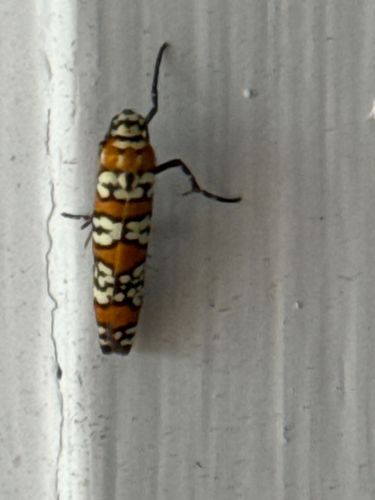
Ailanthus Webworm Moth
Atteva aurea
- Order & Family
- Lepidoptera (moths and butterflies), Attevidae (Ailanthus Webworm Moths)
- Size
- Wingspan typically ranges from 25 to 35 mm (1 to 1.4 inches).
Natural Habitat
Commonly found in areas where its host plant, the Tree of Heaven (Ailanthus altissima), is present, which includes disturbed areas, urban environments, roadsides, and open woodlands. Its range has expanded with the spread of Ailanthus.
Diet & Feeding
Adult moths primarily feed on nectar from various flowers. Larvae (caterpillars) feed on the leaves and sometimes bore into the stems of their host plants, primarily Trees of Heaven (Ailanthus altissima), but also sumac and other related plants.
Behavior Patterns
Adults are active during the day, often seen flying in open, sunny areas or resting on vegetation. The larvae are borers, feeding inside the stems and roots of host plants. The bright coloration of the adult moth is thought to be a form of aposematism, warning predators of its potential toxicity.
Risks & Benefits
Potential risks include being a pest to its host plant, the invasive Tree of Heaven, as its larvae can cause defoliation and stem damage. Ironically, this can be seen as a benefit in controlling the spread of the invasive Ailanthus tree. There are no known direct risks to humans.