
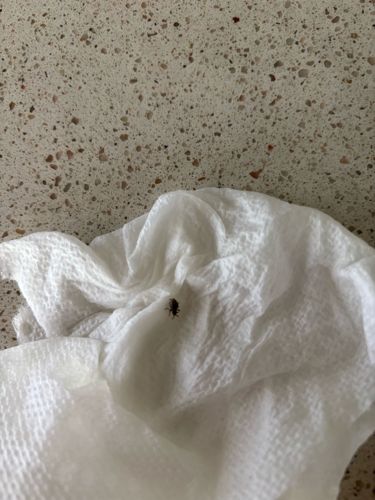
Carpet Beetle
There are several common species, including Anthrenus scrophulariae (Common Carpet Beetle), Attagenus unicolor (Black Carpet Beetle), and Trogoderma variabile (Warehouse Beetle). Without a closer view, specific identification is not possible, so a general family is provided.
- Order & Family
- Order: Coleoptera, Family: Dermestidae (Dermestid Beetles)
- Size
- Adults typically range from 2mm to 5mm (.08 to .2 inches) in length, depending on the species. Larvae can be slightly larger.
Natural Habitat
Carpet beetles are commonly found indoors, particularly in homes, museums, and warehouses. They thrive in dark, undisturbed areas where organic materials are present, such as carpets, rugs, upholstered furniture, closets, attics, and storage areas. Outdoors, adult carpet beetles can be found on flowering plants.
Diet & Feeding
Larvae of carpet beetles feed on a wide variety of animal and plant products, including wool, silk, leather, feathers, pet hair, dried meat, dead insects, museum specimens, and even some spices and grains. Adult carpet beetles primarily feed on pollen and nectar from flowers.
Behavior Patterns
Carpet beetles often lay their eggs in secluded places like floor cracks, under furniture, or in air ducts. Larvae are typically hairy and move slowly, preferring dark, undisturbed areas where food sources are plentiful. Adults are attracted to light and are often seen near windows.
Risks & Benefits
Potential risks include significant damage to valuable textiles, clothing, carpets, and other organic materials due to larval feeding, leading to financial loss. They can also cause skin irritation or allergic reactions in some sensitive individuals due to contact with their larval hairs. They are not known to transmit diseases to humans. Benefits are negligible in an indoor setting, but in nature, they play a role as scavengers.