
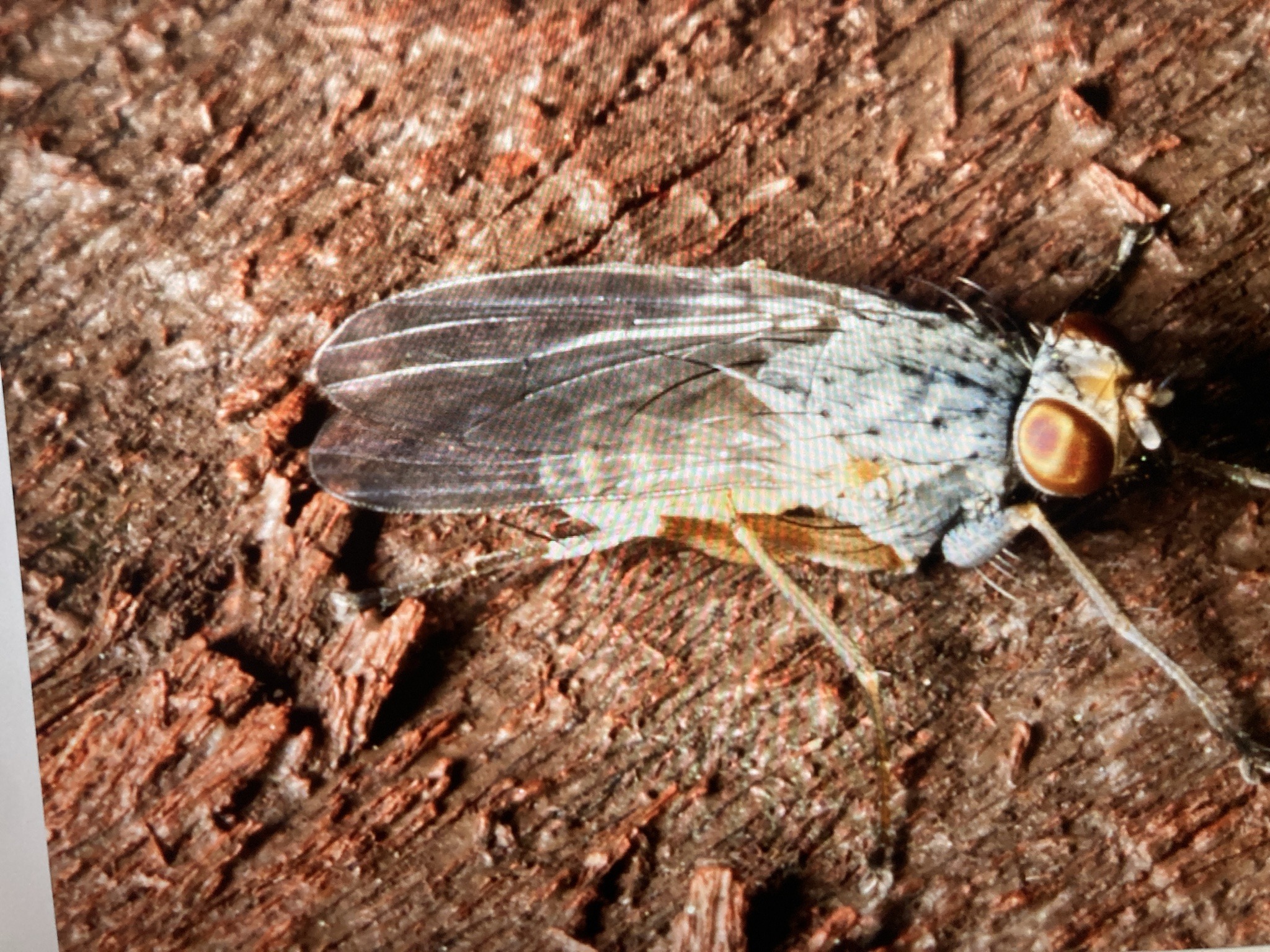
Community identification
Cluster Fly
Pollenia rudis
- Order & Family
- Order Diptera, Family Polleniidae
- Size
- 8 to 10 millimeters (0.3 to 0.4 inches) in length
Natural Habitat
Fields and gardens during the summer; found indoors in attics and wall voids during the autumn and winter for hibernation.
Diet & Feeding
Adults feed on plant nectar and fruit juices; the larvae are parasites that feed on earthworms.
Behavior Patterns
They are known for 'clustering' together in large numbers in dark places to overwinter. Unlike house flies, they are sluggish and move slowly when found indoors in winter. They have a complete metamorphosis life cycle.
Risks & Benefits
They do not carry diseases harmful to humans and are not a risk to structures, but they are considered a major nuisance pest when they invade homes. In the ecosystem, they help control earthworm populations and serve as pollinators for some plants.