
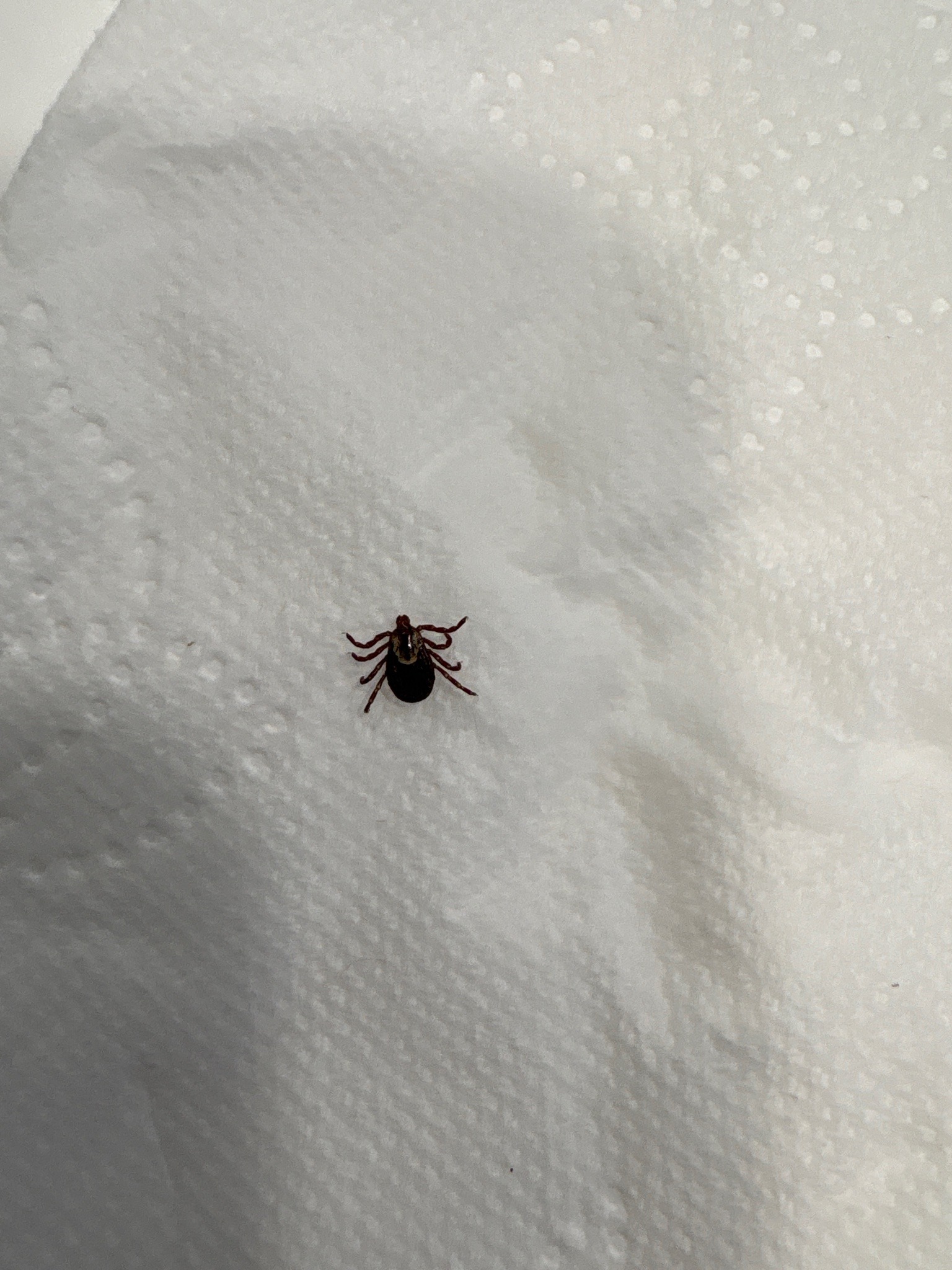
Community identification
American Dog Tick
Dermacentor variabilis
- Order & Family
- Ixodida: Ixodidae
- Size
- 3mm to 5mm (unfed), larger after a blood meal
Natural Habitat
Tall grass, low-growing brush, and wooded areas, often near paths and trails frequented by Mammals.
Diet & Feeding
Obligate hematophagy; they feed on the blood of mammals including dogs, cattle, and humans.
Behavior Patterns
They exhibit 'questing' behavior by climbing to the tips of vegetation and extending legs to grab onto passing hosts. Life cycle includes egg, larva, nymph, and adult stages.
Risks & Benefits
They are a primary vector for Rocky Mountain spotted fever and tularemia. They can also cause tick paralysis in pets and humans. They have no significant benefits to human ecosystems.