
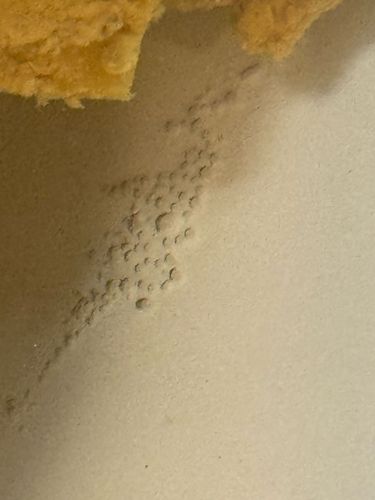
Community identification
Moth eggs
Order Lepidoptera (Species unidentified)
- Order & Family
- Order: Lepidoptera, Family: Various (commonly Noctuidae or Pyralidae in domestic settings)
- Size
- Individual eggs are typically 0.5 mm to 1 mm in diameter; clusters can span several centimeters.
Natural Habitat
Found on various substrates including walls, ceilings, textiles, and near food sources or light fixtures indoors and outdoors.
Diet & Feeding
As eggs, they do not consume food. Upon hatching, larvae (caterpillars) may eat foliage, stored grains, or natural fibers like wool depending on the species.
Behavior Patterns
Eggs are usually laid in clusters or rows by female moths. They are often covered in a protective adhesive or fine scales from the mother's abdomen. They will hatch into larvae within 4 to 10 days depending on temperature.
Risks & Benefits
Most are harmless to humans, but some species are significant agricultural or household pests (like pantry or clothes moths). Some larvae may have stinging hairs or cause minor skin irritation if handled.