
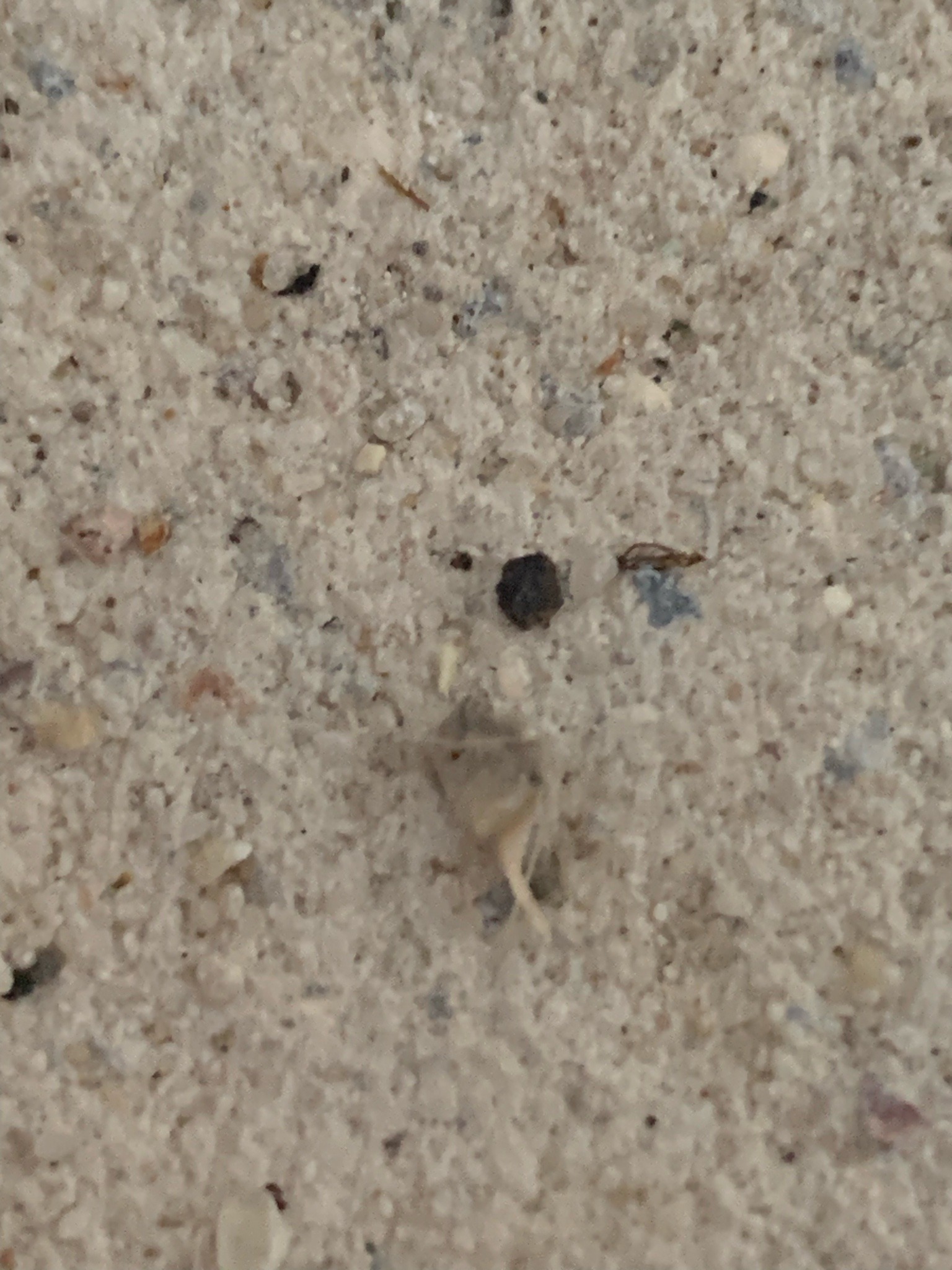
Community identification
Possibly a fungus gnat larva or small soil-dwelling fly larva
Uncertain; possibly Sciaridae
- Order & Family
- Diptera; family Sciaridae (tentative)
- Size
- Usually 2–7 mm as larvae; adults are about 1–4 mm long.
Natural Habitat
Moist soil, decaying organic matter, compost, houseplant potting mix, and damp indoor debris.
Diet & Feeding
Larvae feed mainly on fungi, algae, and decaying plant material; some may nibble young roots. Adults generally consume nectar or do not feed substantially.
Behavior Patterns
Larvae remain in moist substrate and develop through several stages before pupating; adults emerge as small, dark, weak-flying gnats. The photograph is too blurred for confident identification.
Risks & Benefits
Usually harmless to people and beneficial as decomposers, though abundant larvae can damage seedlings and houseplant roots. If found indoors, reducing excess moisture usually controls them.