
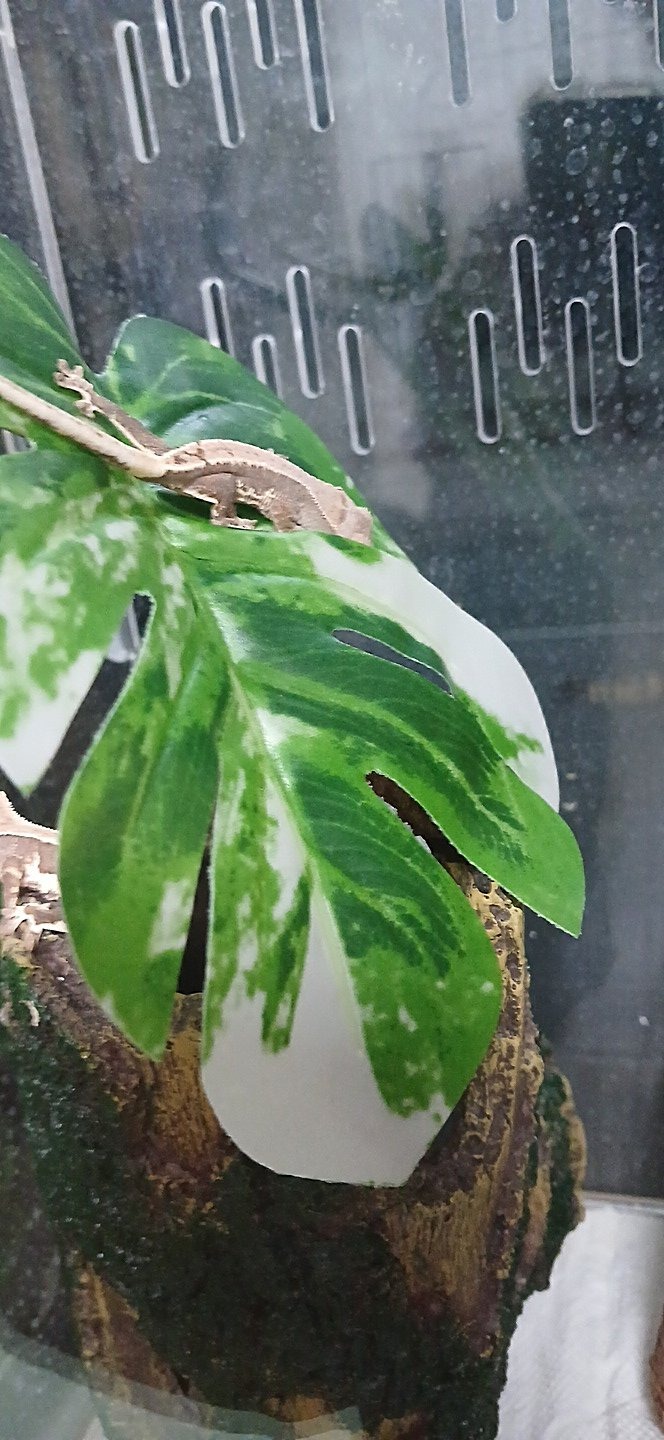
Unidentified gecko (likely juvenile house gecko)
Hemidactylus sp., possibly Hemidactylus frenatus
- Order & Family
- Squamata; Gekkonidae
- Size
- The pictured animal appears roughly 5–15 cm, not 5–15 mm; exact scale is uncertain.
Natural Habitat
On vegetation and artificial surfaces in warm, humid habitats; in Korea, likely an indoor terrarium or captive setting rather than a wild population.
Diet & Feeding
Insectivorous, taking small insects, spiders, and other arthropods. It usually hunts at night and may be attracted to lights.
Behavior Patterns
Nocturnal, agile, and capable of climbing smooth surfaces using adhesive toe pads. It hides in crevices by day and lays small eggs; juveniles resemble miniature adults.
Risks & Benefits
Generally harmless to people and useful because it consumes pest insects. It may bite defensively if handled, and captive reptiles can carry Salmonella; wash hands after contact. The September Korea location is plausible for an indoor/captive gecko, but this species is not a typical widespread wild Korean insect.