
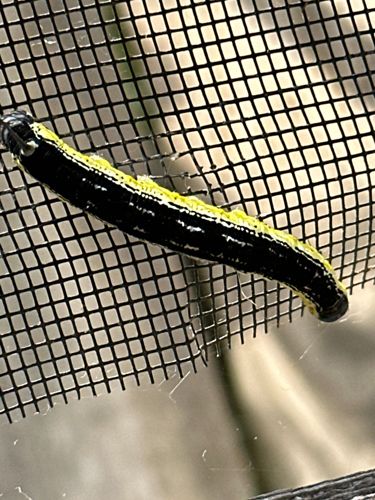
Tobacco Hornworm (Larva)
Manduca sexta (larval stage)
- Order & Family
- Lepidoptera (Order); Sphingidae (Family)
- Size
- Larvae can grow quite large, typically from 5 mm (early instars) up to 90-100 mm (final instar, approximately 3-4 inches) in length.
Natural Habitat
Tobacco hornworms are commonly found in gardens, agricultural fields, and areas where their host plants (especially tobacco and tomato) are abundant. They prefer warm climates.
Diet & Feeding
The primary diet of the tobacco hornworm is the foliage of plants in the Solanaceae family, including tobacco, tomato, potato, eggplant, and various weeds like jimsonweed. They are voracious eaters and can cause significant defoliation.
Behavior Patterns
Tobacco hornworms are solitary feeders and are active primarily at night, though they can be seen feeding during the day. They possess a distinctive 'horn' at their posterior end, which is harmless. When disturbed, they may rear up their anterior body in a defensive posture. As they grow, they molt through several instars. Once mature, they burrow into the soil to pupate, emerging later as a large sphinx moth (Manduca sexta).
Risks & Benefits
Potential risks include significant damage to agricultural crops, particularly tomatoes and tobacco, leading to economic losses for farmers. They are considered agricultural pests. Benefits include their role as a food source for various predators (birds, parasitic wasps, beneficial insects) and their use in scientific research, especially in neurobiology and insect physiology, due to their large size and ease of rearing.