
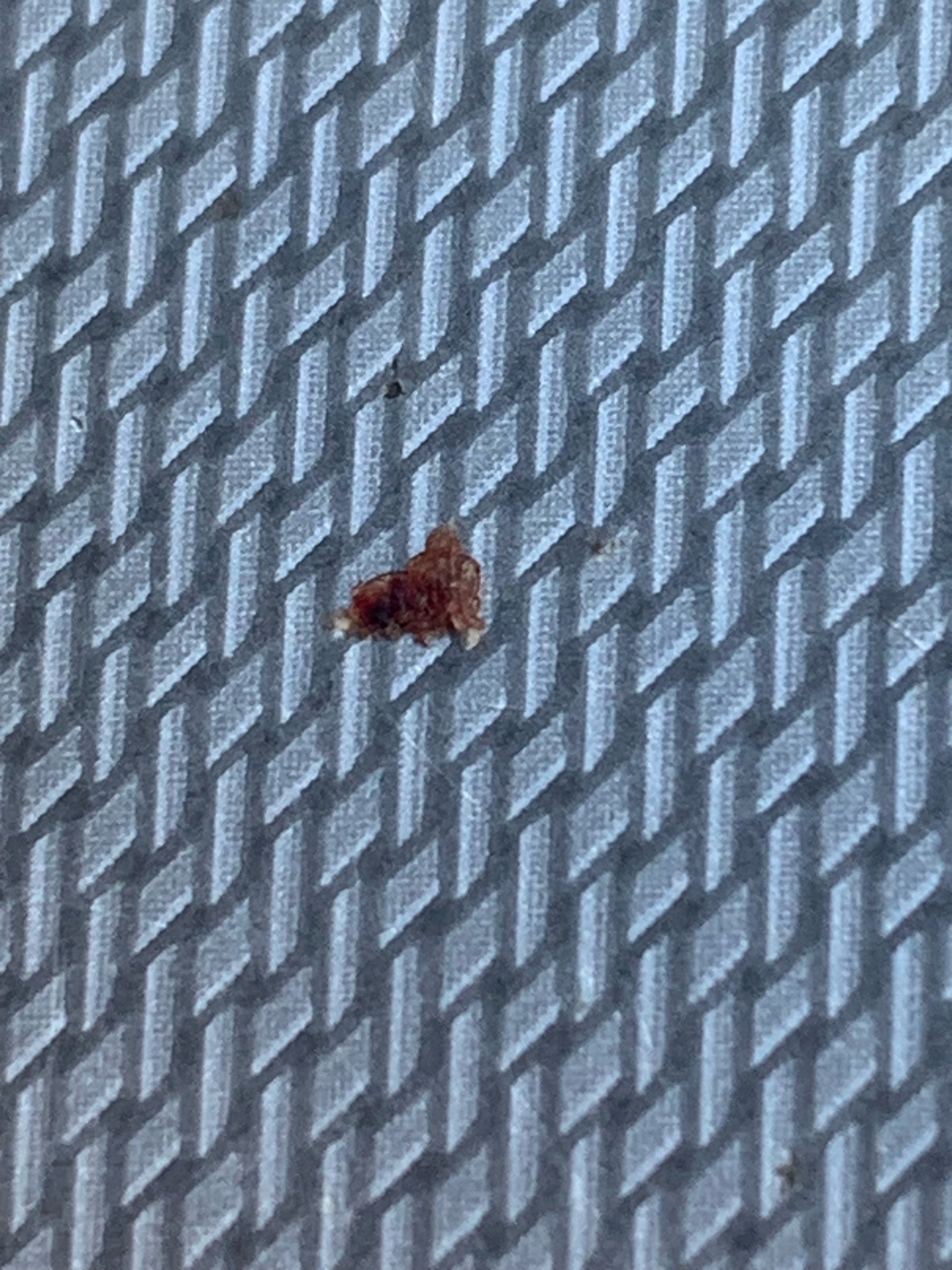
Community identification
Ticks (likely a soft tick or engorged hard tick)
Uncertain from image; possibly *Dermacentor* or *Rhipicephalus* species
- Order & Family
- Ixodida; Ixodidae or Argasidae
- Size
- Typically 1–5 mm unfed; engorged females can reach 10–15 mm.
Natural Habitat
Ticks occur in leaf litter, grass, brush, nests, and on host animals. They may enter homes on pets, clothing, or wildlife.
Diet & Feeding
Blood-feeding ectoparasites of mammals, birds, and sometimes reptiles. Larvae, nymphs, and adults feed by attaching to a host.
Behavior Patterns
They locate hosts by sensing heat, odors, and movement, then remain attached for hours to days. Many species pass through larval, nymphal, and adult stages, each often requiring a blood meal.
Risks & Benefits
Some transmit diseases such as Lyme disease, ehrlichiosis, babesiosis, and Rocky Mountain spotted fever; bites can also cause irritation or paralysis. They are part of food webs, serving as prey for some birds and other arthropods.