
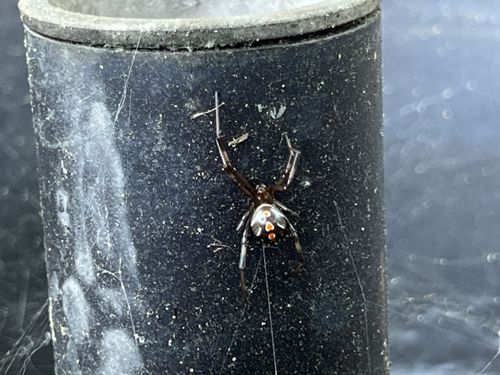
Southern Black Widow Spider
Latrodectus mactans
- Order & Family
- Order: Araneae, Family: Theridiidae
- Size
- Female: Body length typically 8-13 mm (0.31-0.51 inches); leg span can be up to 30-40 mm (1.2-1.6 inches). Males are significantly smaller.
Natural Habitat
Found in undisturbed, dark, and sheltered places. This includes woodpiles, sheds, garages, stone walls, under rocks, in meter boxes, and other outdoor structures. They prefer messy, tangled webs close to the ground.
Diet & Feeding
Insects and other small arthropods that get caught in their web. These can include flies, mosquitoes, grasshoppers, beetles, and even other spiders.
Behavior Patterns
Female southern black widows typically remain in their web, a tangled, messy silk structure, particularly after mating. They are primarily nocturnal. The females are known for their maternal care, guarding their egg sacs aggressively. Unlike many other spiders, they don't hunt actively but wait for prey to become ensnared in their web. The 'widow' name comes from the rare but observed behavior of the female consuming the male after mating, though this is not common in all species or circumstances.
Risks & Benefits
Risk: The bite of a southern black widow spider can be medically significant due to its potent neurotoxic venom, latrotoxin. Symptoms of a bite (latrodectism) can include severe muscle pain and cramping, abdominal pain, nausea, vomiting, tremors, and sweating. While rarely fatal for healthy adults, it can be dangerous for children, the elderly, or individuals with compromised health. Medical attention should be sought for a suspected bite. Benefit: Like other spiders, they play a role in controlling insect populations, including agricultural pests.