
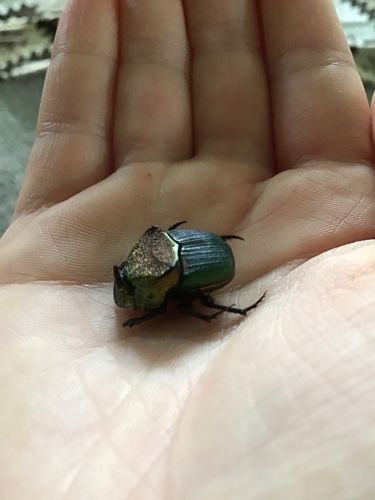
Dung Beetle
Various species within genera such as Onthophagus, Geotrupes, Phanaeus, etc. (Exact species cannot be determined from the image alone without more specific features and location info, but it clearly belongs to the dung beetle group).
- Order & Family
- Order: Coleoptera, Family: Scarabaeidae (specifically within the subfamily Scarabaeinae or Aphodiinae, depending on the exact species)
- Size
- Typically from 5 mm to 30 mm, though some larger species can reach up to 50 mm.
Natural Habitat
Found in a variety of terrestrial habitats where there is a supply of animal dung, including grasslands, forests, deserts, and agricultural areas. They prefer areas with loose soil suitable for burrowing.
Diet & Feeding
Mainly dung (feces) of herbivores and omnivores. Some species also feed on decaying plant matter or fungi.
Behavior Patterns
Dung beetles are known for their distinctive behavior of rolling dung into spherical balls, which they then roll away to lay their eggs in or to consume. They can roll balls many times their own weight. Some species burrow directly under or into the dung. They are primarily nocturnal but some species are active during the day.
Risks & Benefits
Benefits: Essential for ecosystem health, as they play a crucial role in nutrient cycling (breaking down and burying dung), secondary seed dispersal (some seeds pass through animals and are then dispersed by beetles), and pest control (by removing dung, they reduce breeding grounds for flies and other pests). Risks: Generally harmless to humans. While some agricultural pests are scarabs, dung beetles themselves are beneficial.