
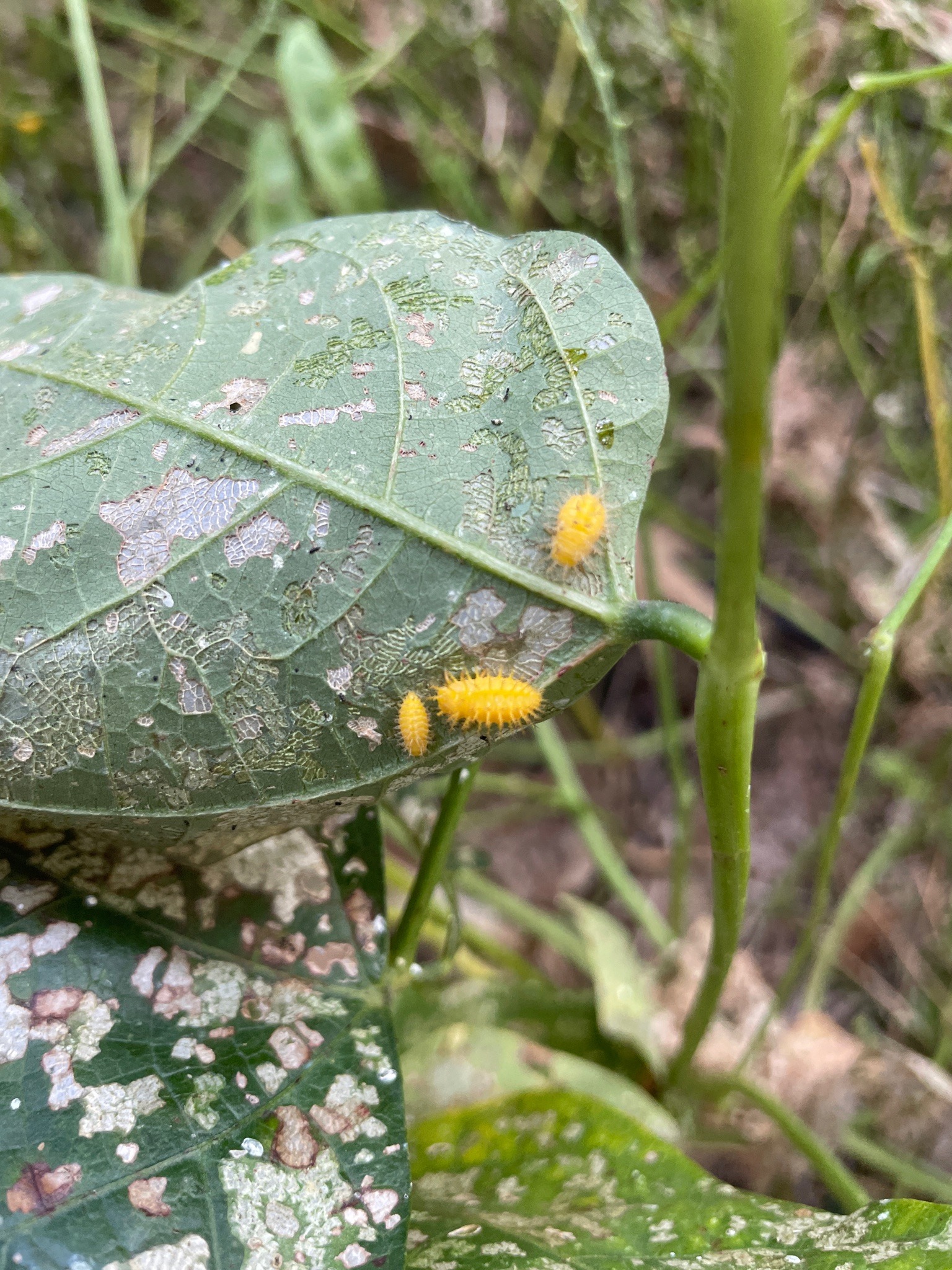
Community identification
Yellow tussock moth caterpillars (likely)
Likely *Euclea* sp. (identification from image is approximate)
- Order & Family
- Lepidoptera; Limacodidae
- Size
- About 8–20 mm long as mature or near-mature larvae; size varies by species and stage.
Natural Habitat
Vegetation in forests, woodland edges, gardens, and other areas with host plants. The larvae are commonly found on leaves and stems.
Diet & Feeding
Chew leaves of various broadleaf plants, often producing irregular patches of skeletonized or scraped foliage.
Behavior Patterns
Larvae are slow-moving and may feed openly or rest on leaf undersides; their dense yellow spines can conceal irritating urticating hairs. They pupate in protective cocoons and emerge as small moths.
Risks & Benefits
Contact may cause painful stinging, itching, or dermatitis in sensitive people, so avoid handling. Adults and larvae contribute to food webs, while moderate feeding is usually minor unless populations become abundant.