
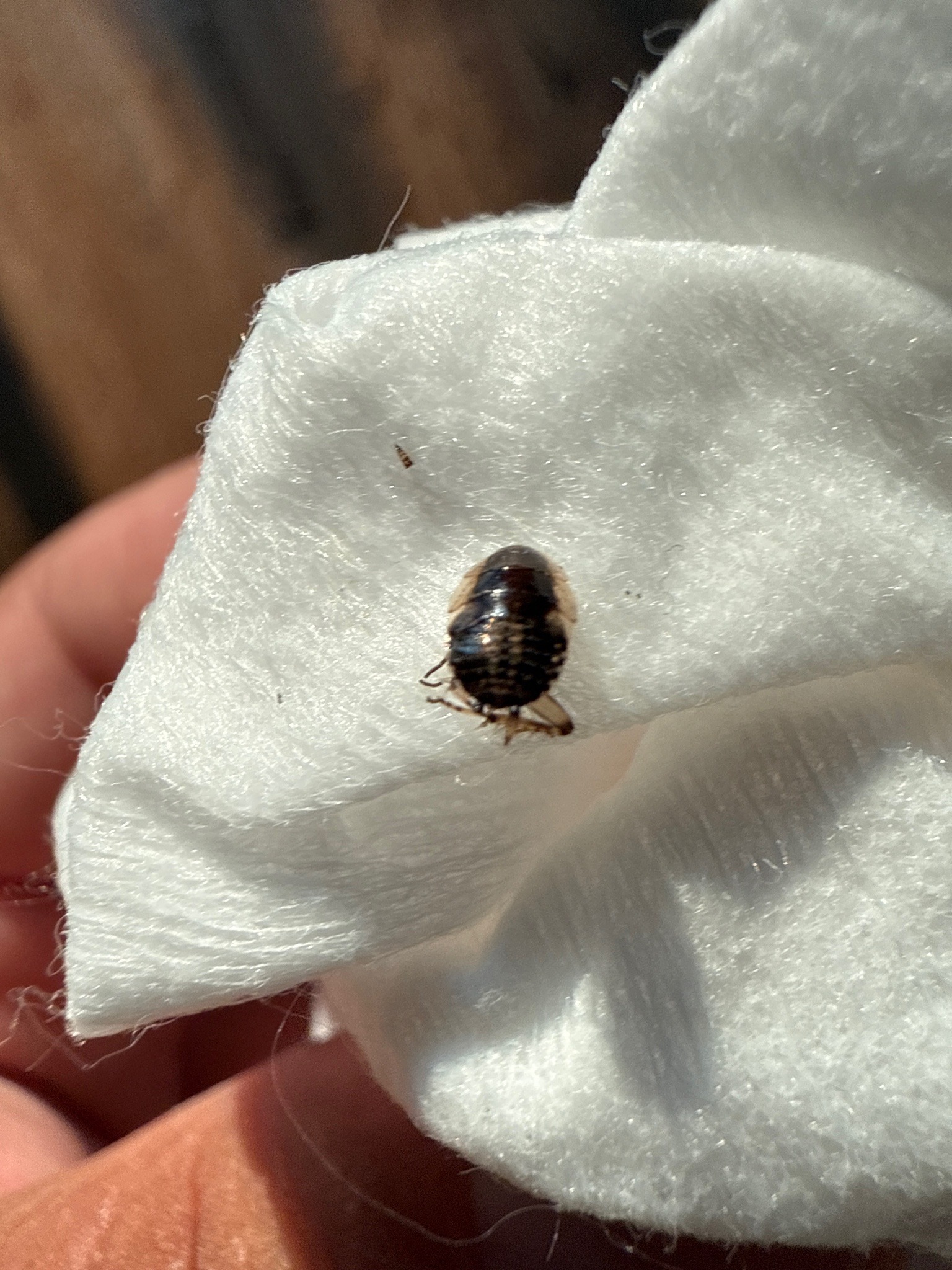
Community identification
Bed bug (likely nymph)
Cimex lectularius
- Order & Family
- Hemiptera; Cimicidae
- Size
- Adults are 4–7 mm long; nymphs range from about 1–6 mm. This specimen appears to be a small, developing nymph or recently fed individual.
Natural Habitat
Human dwellings, especially mattresses, bed frames, upholstery, and cracks near sleeping areas. They hide in narrow, dark crevices during daylight.
Diet & Feeding
Feeds exclusively on blood, primarily from humans but sometimes other warm-blooded animals. It usually feeds at night by piercing skin with specialized mouthparts.
Behavior Patterns
Mostly nocturnal, hiding during the day and emerging when hosts are inactive. Females lay eggs in concealed locations; infestations spread through luggage, clothing, furniture, and wall voids.
Risks & Benefits
Bites can cause itching, inflammation, and allergic reactions, but bed bugs are not known to transmit diseases routinely. They have no meaningful household benefit and can be difficult and costly to eradicate.