
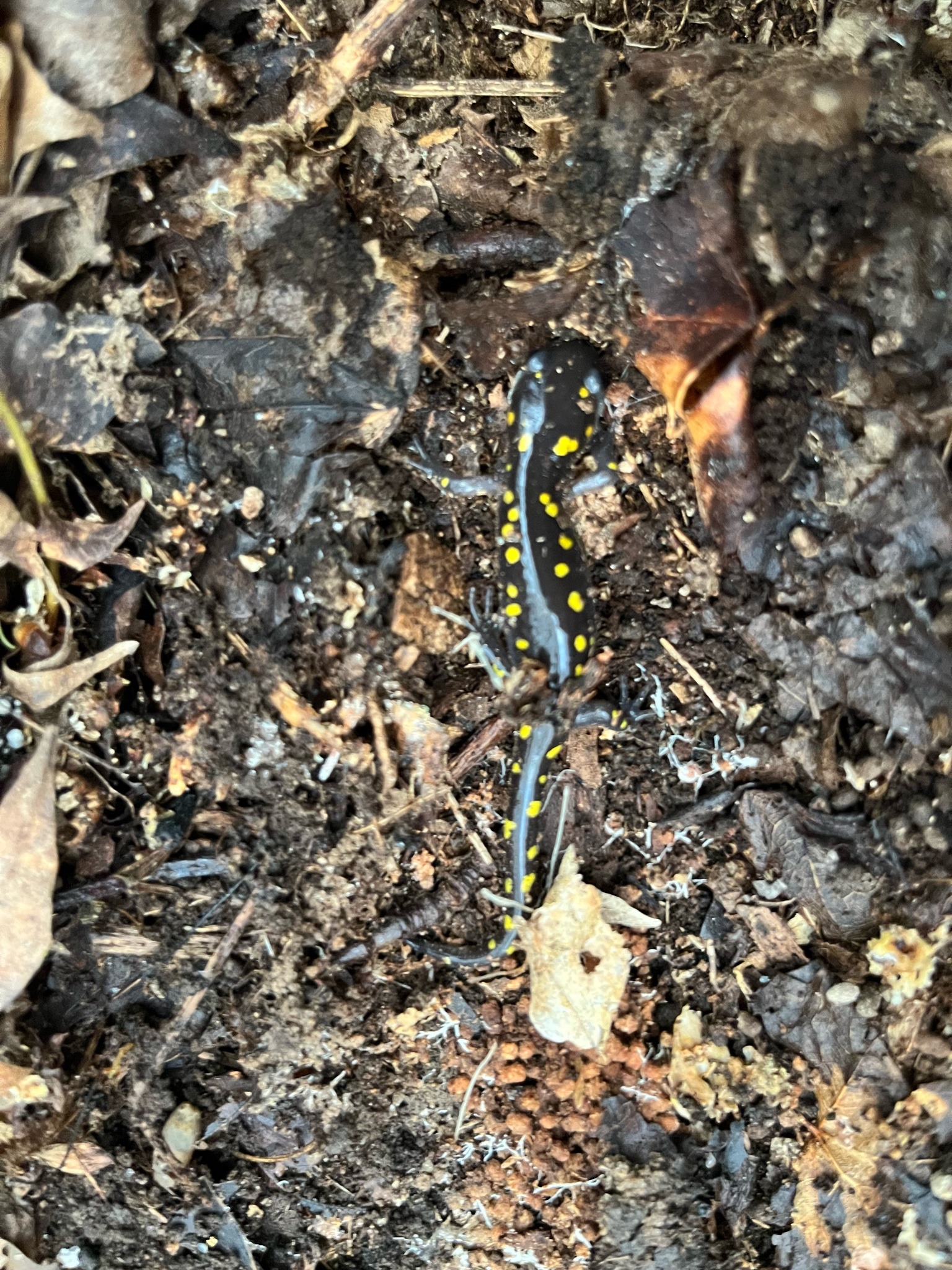
Community identification
Spotted Salamander
Ambystoma maculatum
- Order & Family
- Caudata (Order), Ambystomatidae (Family)
- Size
- 15 to 25 cm (6 to 10 inches) in length
Natural Habitat
Deciduous forests with access to vernal pools or permanent ponds for breeding; they spend most of their lives underground or under leaf litter.
Diet & Feeding
Carnivorous; feeds on insects, earthworms, slugs, spiders, and occasionally smaller salamanders.
Behavior Patterns
Fossorial (living underground), emerging primarily to migrate to breeding pools during the first warm spring rains. They are long-lived and follow a life cycle of aquatic larvae to terrestrial adults.
Risks & Benefits
Benefits the ecosystem by controlling insect populations and serving as an indicator of environmental health. They are harmless to humans, though they secrete a mild toxin from skin glands to deter predators and should not be handled excessively due to their sensitive skin.