
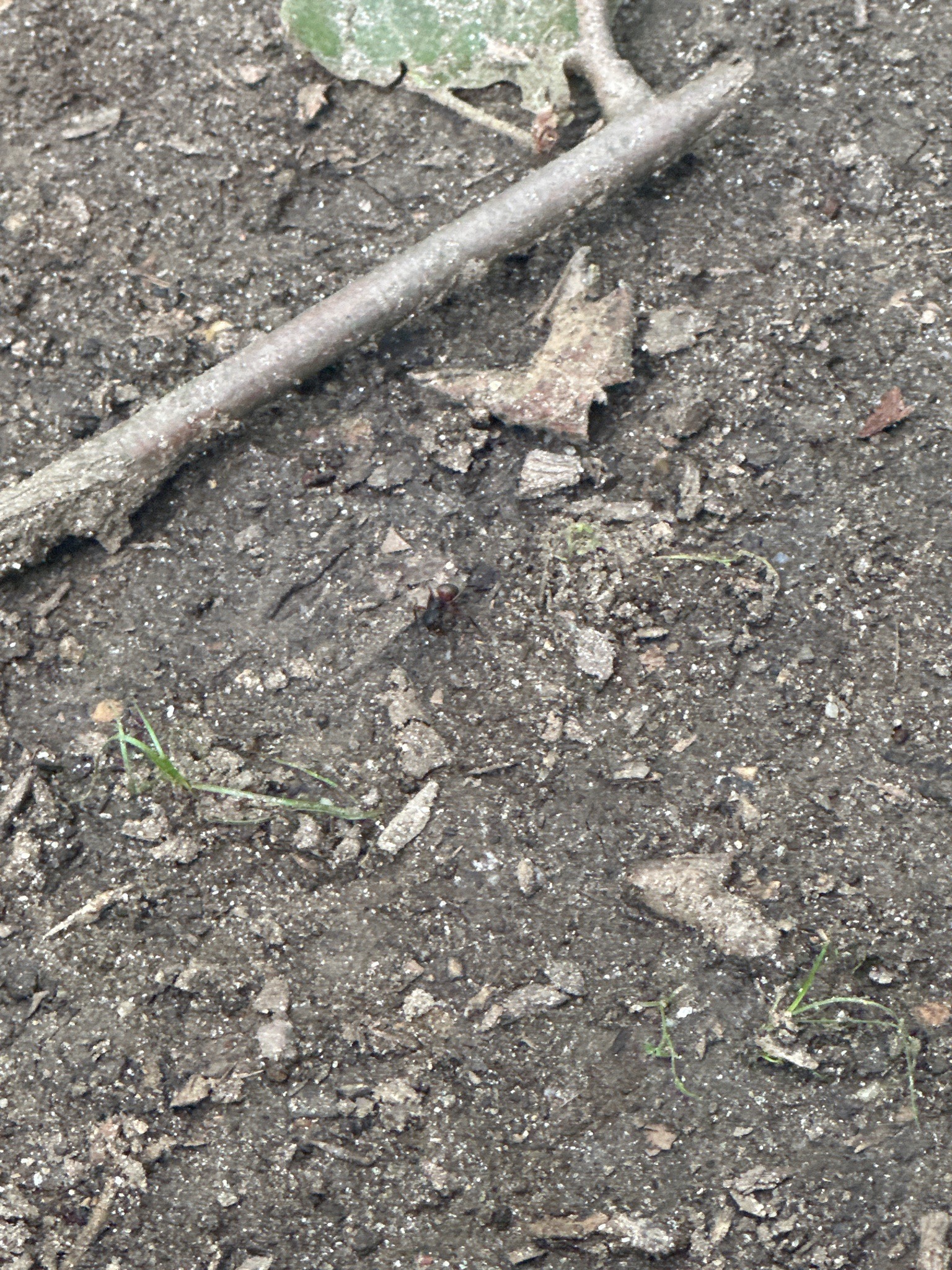
Community identification
Field Ant
Formica spp.
- Order & Family
- Hymenoptera: Formicidae
- Size
- 3 mm to 9 mm depending on the specific species
Natural Habitat
Open areas such as lawns, gardens, fields, and forest edges, often nesting in soil or under rocks and logs
Diet & Feeding
Omnivorous; they scavenge for sweets, organic debris, other insects, and frequently tend aphids for honeydew
Behavior Patterns
Diurnal foragers that live in complex social colonies; known for building mound nests and using chemical pheromone trails to communicate
Risks & Benefits
Generally beneficial for local ecosystems by aerating soil and controlling pest populations; while they do not possess a powerful sting like fire ants, they can bite and spray formic acid if the nest is disturbed