
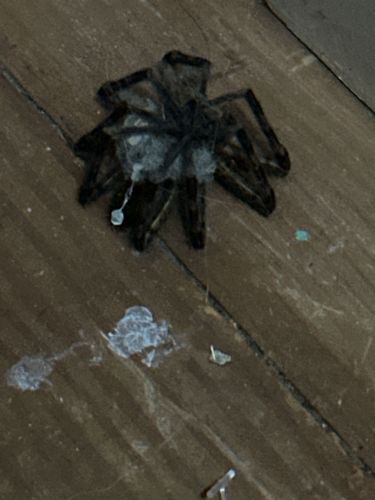
Wolf Spider
Family Lycosidae (species identification would require closer examination)
- Order & Family
- Order: Araneae, Family: Lycosidae
- Size
- Body length can range from 0.4 to 3.5 cm (0.16 to 1.38 inches), with leg spans considerably larger depending on the species.
Natural Habitat
Found in a wide range of habitats, including grasslands, forests, deserts, gardens, and even indoors. They prefer to live on the ground, often burrowing or hiding under rocks, logs, or leaf litter.
Diet & Feeding
Primarily carnivorous, feeding on a wide variety of insects and other small invertebrates, including crickets, grasshoppers, other spiders, beetles, and sometimes small lizards or frogs.
Behavior Patterns
Hunts actively for prey, often at night, rather than building webs to catch food. Females carry their egg sac under their abdomen. They are known for their speed and can be quite skittish when disturbed.
Risks & Benefits
Risks: Bites are uncommon and typically happen if the spider feels threatened or is accidentally pressed against skin. While their venom is not considered dangerous to humans, a bite can cause localized pain, redness, and swelling, similar to a bee sting. Benefits: They are beneficial predators, helping to control populations of various insect pests in agricultural and natural ecosystems.