
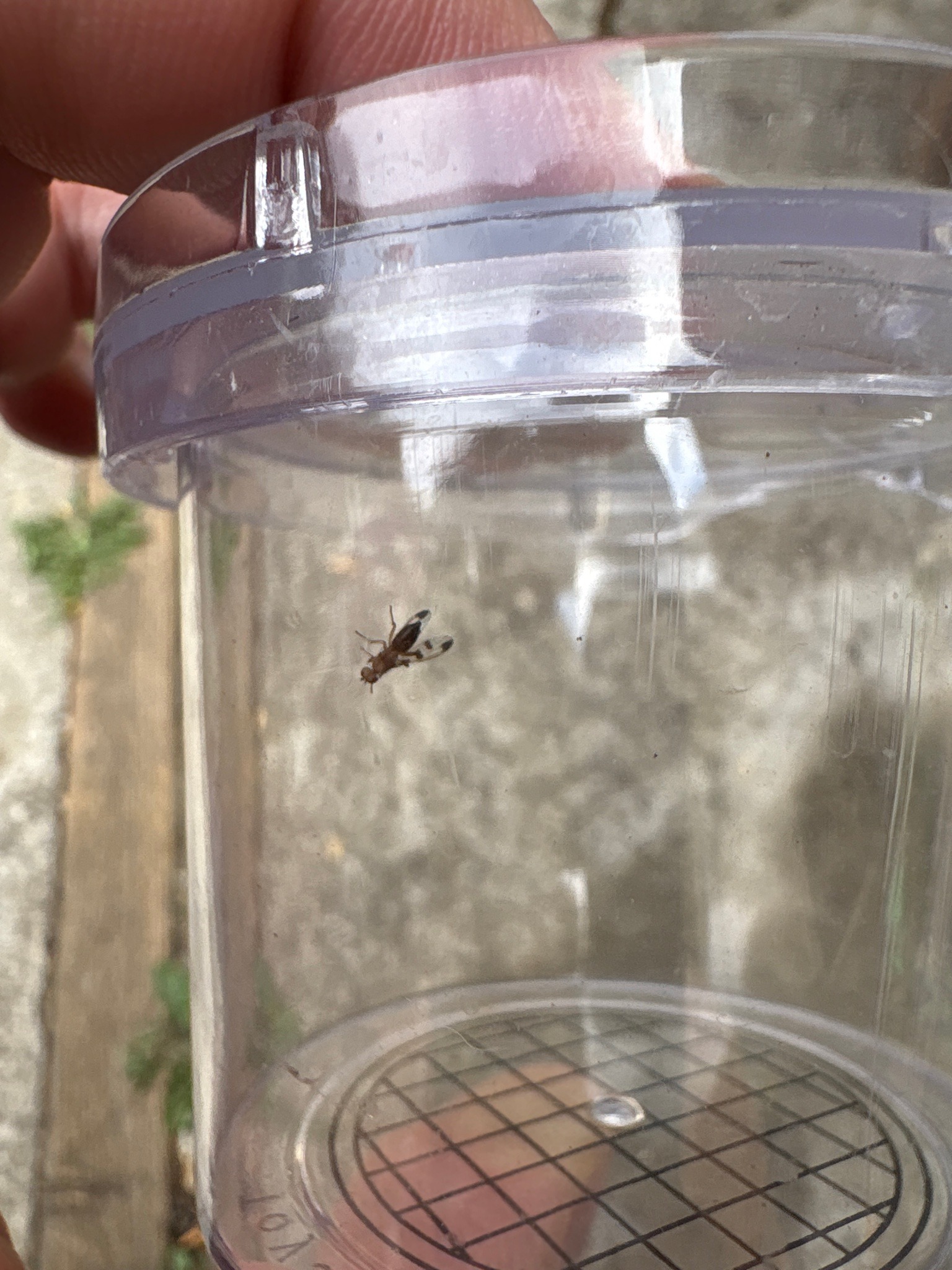
Community identification
Small dark-winged fly (likely a fungus gnat)
Bradysia spp. (probable)
- Order & Family
- Diptera; Sciaridae
- Size
- Adults are typically 2–4 mm long; the pictured insect appears within this range.
Natural Habitat
Moist soil, decaying plant material, compost, greenhouses, and houseplant potting mix.
Diet & Feeding
Larvae feed mainly on fungi, algae, and decaying organic matter in soil; adults consume little, often taking moisture or nectar.
Behavior Patterns
Adults are weak fliers that commonly walk or hover near soil and windows. Larvae develop in damp organic substrates, completing the life cycle in several weeks under favorable conditions.
Risks & Benefits
Generally harmless to people and pets. Larvae assist decomposition but can damage seedlings and roots when populations are high; identification from the image is not definitive.