
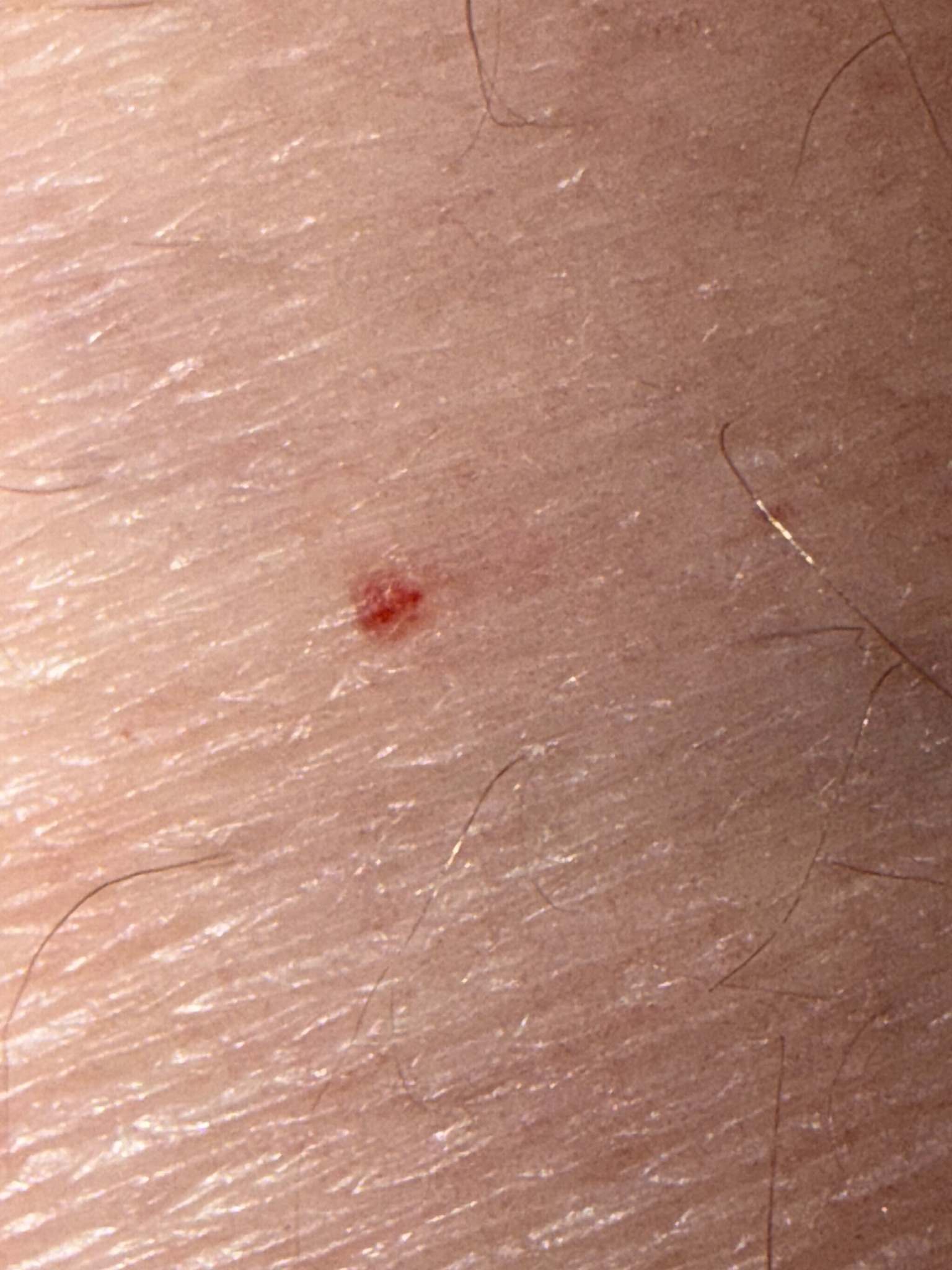
Community identification
Likely chigger (red mite) bite; the mite itself is not visible
Likely Trombiculidae species, often *Trombicula* or *Eutrombicula*
- Order & Family
- Acari (mites; traditionally subclass Acarina), family Trombiculidae
- Size
- Larvae are about 0.15–0.3 mm and usually require magnification; the red spot shown is a skin reaction, not the animal.
Natural Habitat
Larvae live in leaf litter, grass, brush, and moist soil, especially in warm regions. They may attach briefly to people outdoors.
Diet & Feeding
Larvae feed on liquefied skin tissue and lymph after injecting digestive enzymes; adults and nymphs eat small arthropods and organic matter.
Behavior Patterns
Larvae commonly attach around tight clothing, ankles, waist, or skin folds and feed for several hours to days before dropping off. They do not burrow into skin or remain embedded.
Risks & Benefits
Bites can cause intensely itchy red bumps and occasional secondary infection from scratching. Chiggers recycle organic material and form part of soil food webs; some species can transmit scrub typhus in parts of Asia-Pacific.