
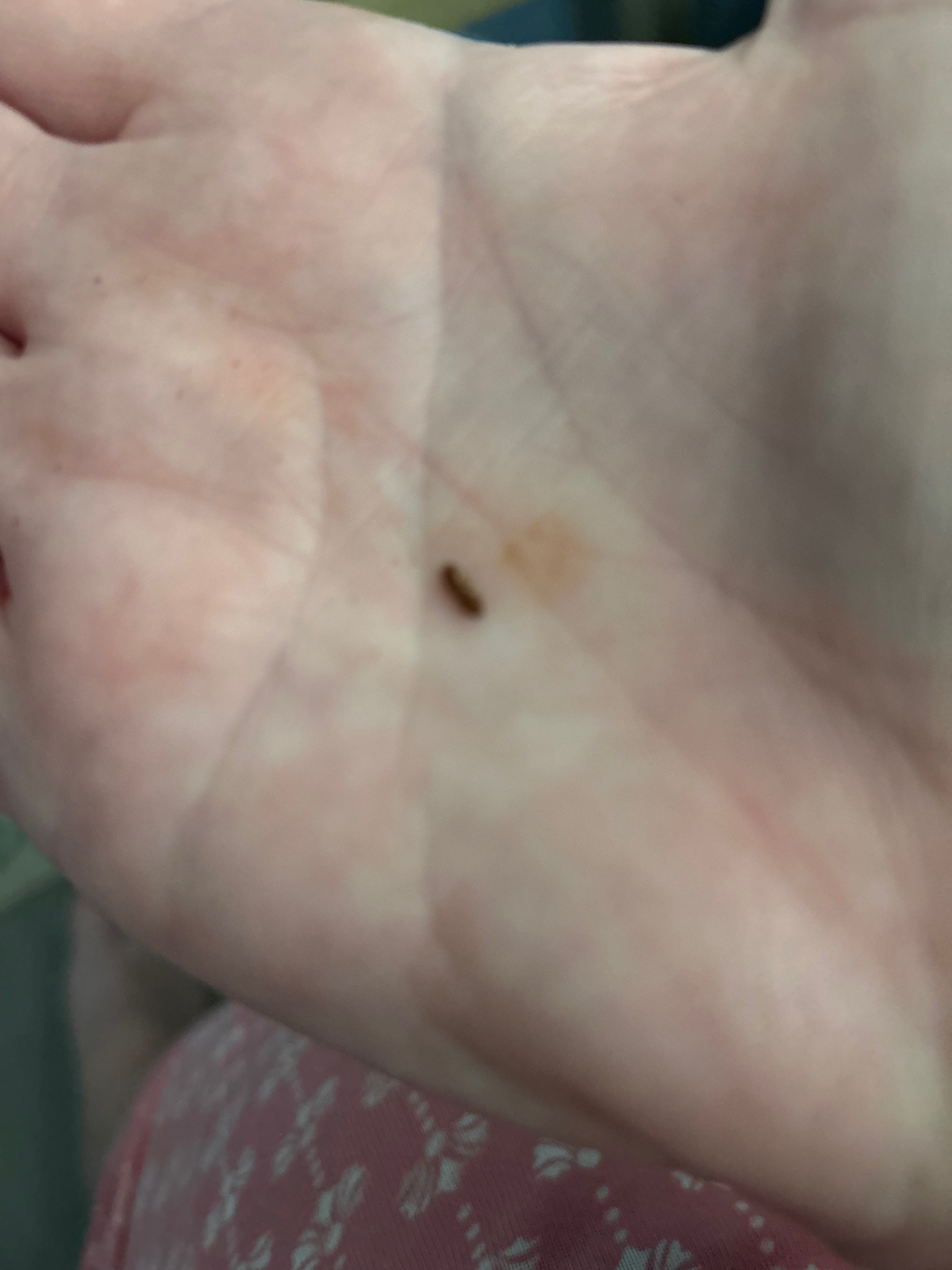
Community identification
Flea (tentative identification)
Siphonaptera; likely Ctenocephalides species
- Order & Family
- Order Siphonaptera; family Pulicidae
- Size
- Usually 1.5–3.3 mm long; the pictured specimen is too indistinct for precise measurement.
Natural Habitat
Fleas live on mammals and birds, with eggs and larvae in carpets, bedding, upholstery, soil, and pet resting areas.
Diet & Feeding
Adults consume blood, mainly from mammals; larvae feed on dried organic debris, including adult flea feces.
Behavior Patterns
Wingless and laterally flattened, fleas move rapidly through fur and can jump many times their body length. Eggs readily fall into the environment, where immature stages develop before adults emerge.
Risks & Benefits
Bites cause itchy, irritating papules and may trigger allergic dermatitis; fleas can transmit pathogens and parasites, including tapeworms. They have little direct ecosystem benefit but serve as prey for other organisms.