
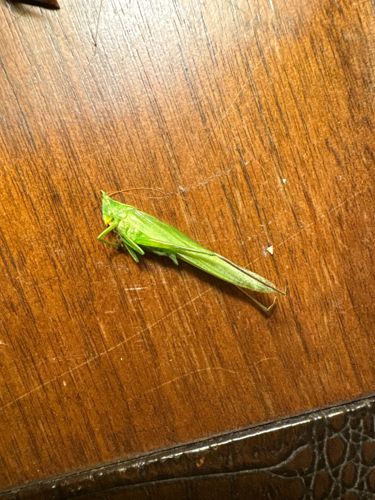
Katydid
Tettigoniidae (various genera and species)
- Order & Family
- Order: Orthoptera, Family: Tettigoniidae
- Size
- Typically range from 2 to 10 cm (0.8 to 4 inches) in body length, with some tropical species being larger.
Natural Habitat
Found in a variety of leafy environments, including gardens, forests, grasslands, and shrubs, where their camouflage helps them blend in with foliage.
Diet & Feeding
Mainly herbivorous, feeding on leaves, flowers, and seeds of various plants. Some species may also consume small insects or detritus.
Behavior Patterns
Katydids are typically nocturnal, using their strong hind legs to jump away from threats. Males produce a 'singing' sound by stridulation (rubbing their wings together) to attract females. Females lay eggs by inserting them into plant stems or soil.
Risks & Benefits
Generally harmless to humans. While large populations can cause some damage to garden plants or crops, they are not typically considered major pests. They play a role in the food chain, serving as food for birds and other predators. Their herbivorous diet contributes to plant decomposition and nutrient cycling.