
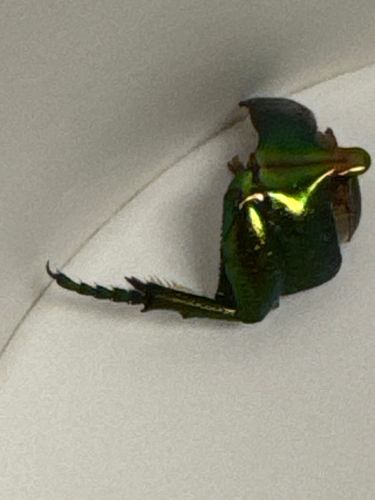
Figeater Beetle
Cotinis mutabilis
- Order & Family
- Order: Coleoptera, Family: Scarabaeidae (Scarab Beetles)
- Size
- Typically 2.0 - 3.5 cm (0.8 - 1.4 inches) in length.
Natural Habitat
Common in orchards, gardens, wooded areas, and agricultural fields where host plants and decaying wood are present. They are often found in urban and suburban environments.
Diet & Feeding
Adults primarily feed on ripe and fermenting fruits (especially figs, peaches, and plums) and tree sap. Larvae feed on decaying organic matter and rotting wood.
Behavior Patterns
Adults are active during the day, often seen flying among trees or feeding on fermenting sap or ripe fruit. Larvae develop in decaying wood, often taking several years to mature.
Risks & Benefits
Potential risks include being a minor agricultural pest, as their feeding on ripe fruit can cause damage to crops, particularly figs and stone fruits. They can also be a nuisance to gardeners. Benefits include their role as decomposers, with larvae breaking down decaying wood and organic matter, contributing to nutrient cycling in ecosystems.