
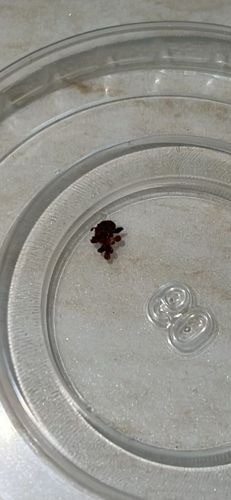
Spider beetle (likely Hairy spider beetle or a related species)
Ptinus spp. (e.g., Ptinus villiger, Ptinus fur)
- Order & Family
- Order: Coleoptera, Family: Ptinidae (formerly Anobiidae, subfamily Ptininae)
- Size
- Typically small, ranging from 1 to 5 mm in length.
Natural Habitat
Commonly found in pantries, warehouses, granaries, museums, and other places where dried food products, animal products, or natural fibers are stored. They prefer dark, undisturbed, and often damp environments.
Diet & Feeding
Omnivorous scavengers. They feed on a wide range of dry organic materials, including stored products such as grains, flour, spices, dried fruits, pet food, wool, and even museum specimens. They are considered pests of stored food products.
Behavior Patterns
Spider beetles are typically nocturnal. They are known for their ability to survive long periods without food and can be quite resilient. Larvae are often found in the products they infest, while adults are more mobile.
Risks & Benefits
Risks: Primarily a pest in homes, food processing facilities, and storage areas. They contaminate food products with their presence, webbing, and excrement, making them unfit for consumption. They can cause economic losses for businesses. They are not known to bite or transmit diseases to humans. Benefits: In natural environments, they contribute to the decomposition of organic matter, but their primary interaction with humans is as a pest.