
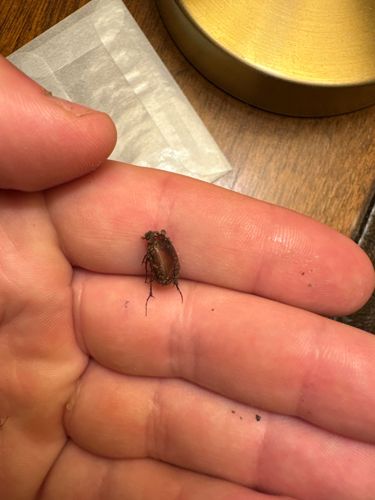
Carpet Beetle (likely a Varied Carpet Beetle or a similar species of Dermestid Beetle)
Likely *Anthrenus verbasci* (Varied Carpet Beetle) or another species within the family Dermestidae.
- Order & Family
- Order: Coleoptera, Family: Dermestidae
- Size
- Adults typically range from 2 mm to 5 mm (0.08 to 0.2 inches) in length. The insect in the image appears to be within this range, being quite small.
Natural Habitat
Indoors, larvae can be found in carpets, rugs, upholstered furniture, clothing made of natural fibers, pantries (feeding on dried food products), museum collections, and attics/storage areas. Outdoors, adults are found on flowers.
Diet & Feeding
Larvae feed on a wide variety of animal-based products such as wool, silk, leather, pet hair, feathers, dried pet food, dead insects, and museum specimens. Some species may also feed on dried plant materials. Adults primarily feed on pollen and nectar outdoors.
Behavior Patterns
Dermestid beetles, especially carpet beetles, are often found indoors. Adults are usually good fliers and are attracted to light, which can lead them indoors. Larvae are typically found in dark, undisturbed areas where their food sources are abundant. They are known for their ability to digest keratin, a protein found in animal products.
Risks & Benefits
Risks: Carpet beetles are considered household pests. Their larvae can cause significant damage to natural fiber textiles, carpets, clothing, furs, and stored food products. They do not bite humans or transmit diseases. Benefits: In nature, some dermestid beetles play a role in decomposition, helping to clean up animal carcasses. In forensic entomology, certain species are used to determine time of death.