
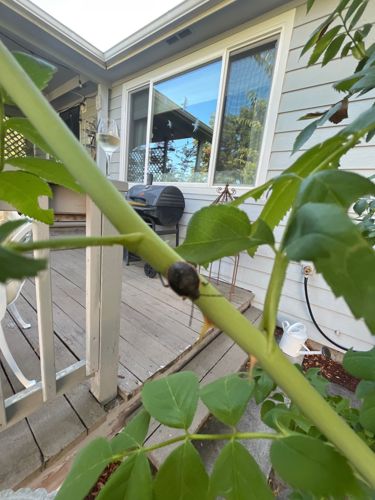
Aphid (likely a type of rose aphid or similar large aphid species)
There are many species of aphids; without a clearer view, a precise scientific name is difficult. Likely Aphis rosae (Rose Aphid) or a closely related species within the Aphididae family.
- Order & Family
- Order: Hemiptera, Family: Aphididae
- Size
- Typically 1-4 mm, depending on the species. The one in the image appears to be on the larger end of this range, possibly around 2-4 mm given its apparent size relative to the rose stem.
Natural Habitat
Aphids are found on a wide variety of plants, including ornamental plants, agricultural crops, and wild vegetation. They prefer tender new growth and are often found on stems, leaves, and flower buds. Given the presence on a rose stem, it's a common habitat for many aphid species.
Diet & Feeding
Aphids are phytophagous, meaning they feed on plant sap by piercing plant tissues with their stylets and sucking out the fluids. They excrete a sugary substance called honeydew, which can lead to sooty mold growth on plants.
Behavior Patterns
Aphids reproduce rapidly, often through parthenogenesis, meaning females can produce offspring without mating. They typically gather on new growth, undersides of leaves, and flower buds to feed. They move slowly and may drop off plants if disturbed. Some species can produce winged forms when colonies become too crowded or host plant quality declines, allowing them to disperse to new plants.
Risks & Benefits
Risks: Aphids are significant plant pests. Their feeding can cause stunted growth, distorted leaves, yellowing, and wilting. Their honeydew excretions attract ants and can lead to the growth of sooty mold, which reduces photosynthesis. They can also transmit plant viruses. Benefits: In certain ecosystems, they serve as a food source for natural predators like ladybugs, lacewings, and parasitic wasps, which can help control their populations. Some ants may 'farm' aphids for their honeydew.