
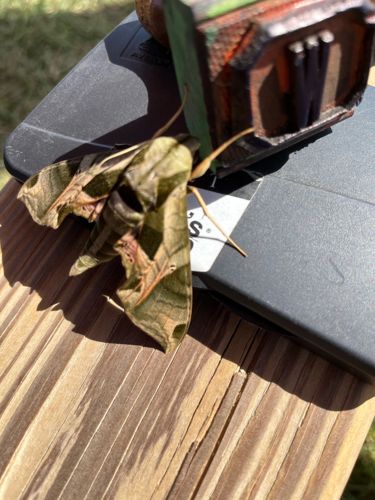
Pandora Sphinx Moth
Eumorpha pandorus
- Order & Family
- Lepidoptera, Sphingidae
- Size
- Wingspan typically ranges from 3.2 to 4.5 inches (8-11.5 cm)
Natural Habitat
Deciduous woodlands, suburban areas, and gardens where host plants like Virginia creeper and grapevines are found.
Diet & Feeding
Adult Pandora Sphinx Moths feed on nectar from various flowers, particularly those that are fragrant at night. The caterpillars (larvae) primarily feed on the leaves of Virginia creeper (Parthenocissus quinquefolia) and wild and cultivated grapevines (Vitis species).
Behavior Patterns
These moths are primarily nocturnal, flying at dusk and into the night to feed. They are known for their strong, rapid flight. The caterpillars are large and green with eye-spots, feeding voraciously before pupating in underground chambers. Adults are often attracted to lights.
Risks & Benefits
Generally beneficial as pollinators, though their role specifically as pollinators isn't as extensively documented as some other insects. The caterpillars, while large, are not typically considered significant pests in cultivated grapevines unless present in very high numbers; they primarily feed on wild vines and Virginia creeper, which is often considered a weed. There are no known risks to humans from direct contact.