
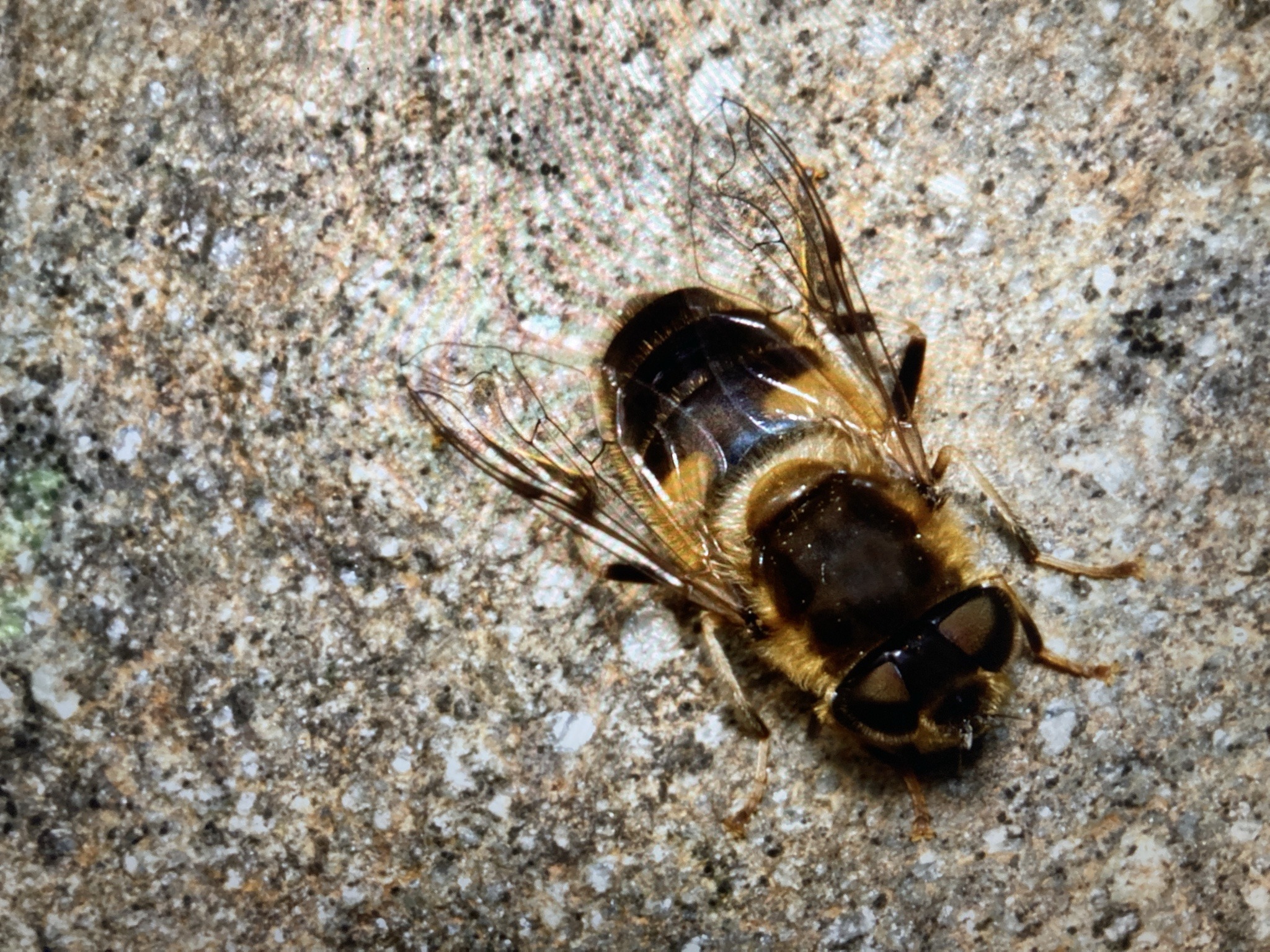
Community identification
Common Drone Fly
Eristalis tenax
- Order & Family
- Diptera: Syrphidae
- Size
- 14-16 mm in length
Natural Habitat
Gardens, meadows, and areas with stagnant water or decaying organic matter
Diet & Feeding
Adults feed on nectar and pollen; larvae (rat-tailed maggots) consume decaying organic material in stagnant water
Behavior Patterns
Known for hovering in place; mimics honey bees to deter predators (Batesian mimicry); larvae breathe through a long, telescopic tail tube
Risks & Benefits
Benefits the ecosystem as a significant pollinator; larvae help decompose organic waste; no sting threat to humans