
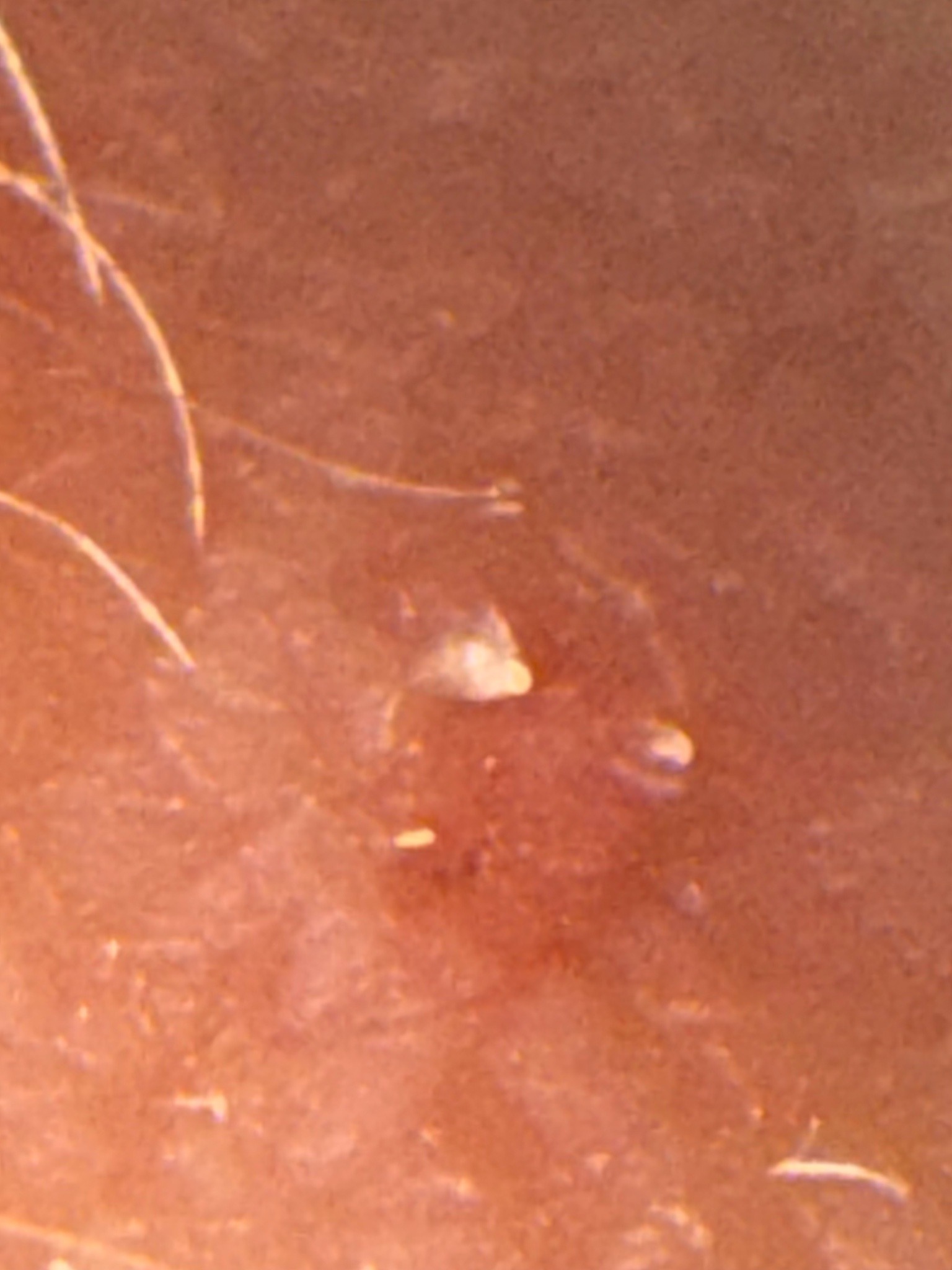
Community identification
Flea (likely human or cat flea)
Ctenocephalides spp.; species cannot be confirmed from this image
- Order & Family
- Siphonaptera, Pulicidae
- Size
- About 1.5–3.3 mm long; laterally flattened and usually dark brown, though lighting may make them appear pale.
Natural Habitat
Carpets, bedding, upholstery, soil, and animal nesting areas; adults remain mainly on mammalian or avian hosts.
Diet & Feeding
Adults feed on blood. Larvae consume dried blood, skin debris, and organic matter in the environment.
Behavior Patterns
Wingless, highly mobile jumpers with strong legs; eggs and larvae develop off-host, while adults seek hosts through heat, movement, and carbon dioxide.
Risks & Benefits
Bites cause itchy papules and may trigger flea-allergy dermatitis; fleas can transmit pathogens and, rarely, tapeworms. They also serve as prey for spiders and other predators.