
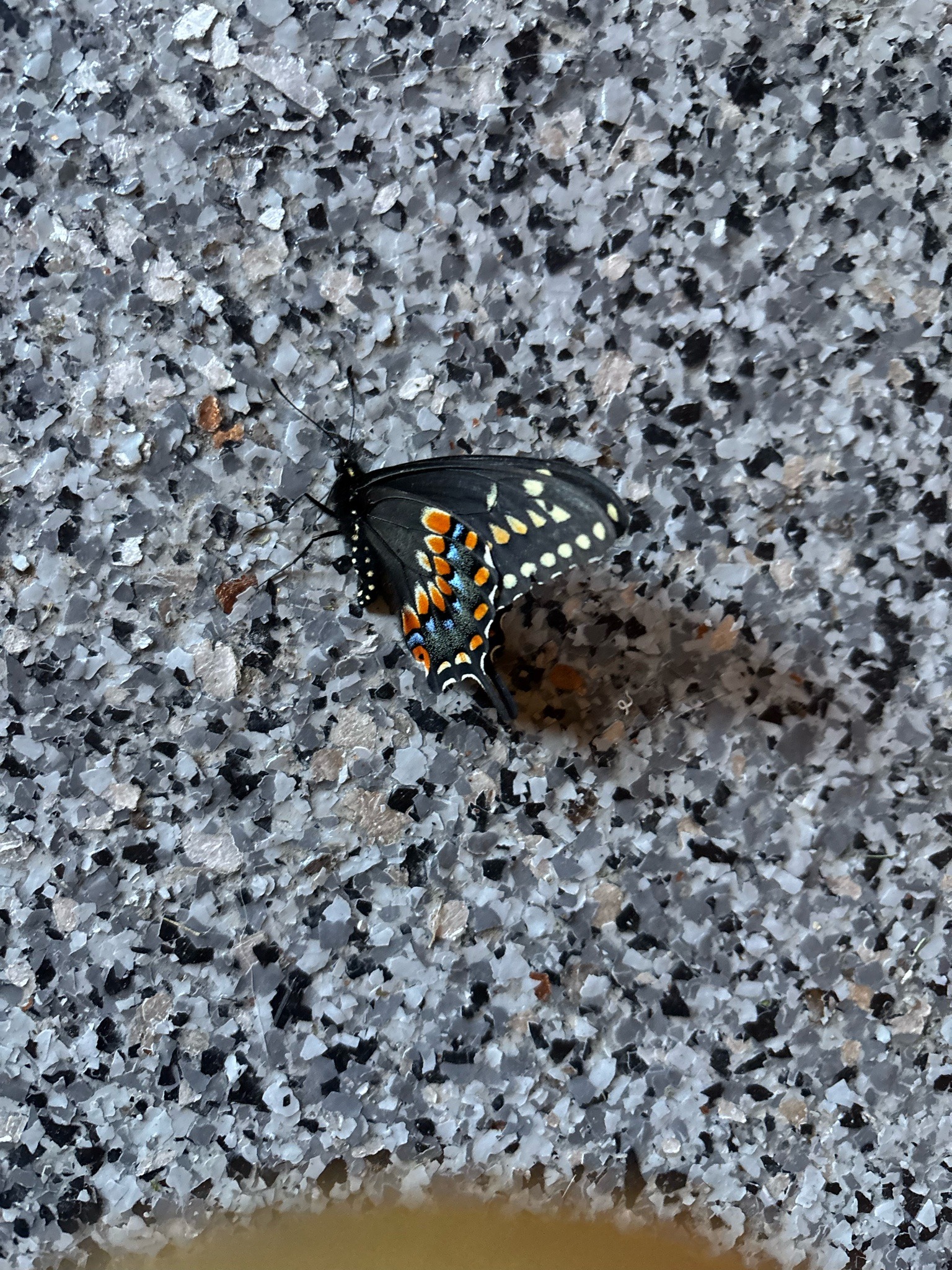
Community identification
Black Swallowtail
Papilio polyxenes
- Order & Family
- Lepidoptera, Papilionidae
- Size
- 3.1 to 4.3 inches (8 to 11 cm) wingspan
Natural Habitat
Open areas including fields, meadows, parks, marshes, and suburban gardens across North America.
Diet & Feeding
Adults feed on flower nectar from clover, milkweed, and thistles. Larvae (caterpillars) eat plants in the carrot family (Apiaceae) such as dill, parsley, fennel, and Queen Anne's lace.
Behavior Patterns
Active during the day (diurnal). Males often practice hilltoping to seek mates. They undergo complete metamorphosis, and caterpillars exhibit a defensive organ called an osmeterium that emits a foul odor when threatened.
Risks & Benefits
Benefits the ecosystem as a significant pollinator. They pose no risk to humans, though the caterpillars can be minor pests in vegetable gardens if they consume dill or parsley crops.