
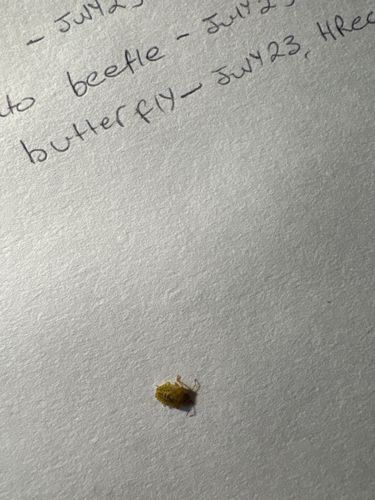
Aphid
Aphididae (a family, not a single species, as specific identification from this image is not possible)
- Order & Family
- Order: Hemiptera, Family: Aphididae (True Aphids)
- Size
- Typically 1-10 mm (0.04-0.4 inches) in length, though most are on the smaller end of this range.
Natural Habitat
Aphids are found on a wide variety of plants, including crops, ornamental plants, weeds, and trees. They tend to congregate on new growth, the undersides of leaves, and stems, where the plant tissue is softer and sap is readily available. They can be found in almost any terrestrial environment where plants grow.
Diet & Feeding
Aphids are phytophagous, meaning they feed exclusively on plant sap. They insert their needle-like mouthparts (stylets) into the plant's pholem vessels to suck out nutrient-rich sap. This feeding can harm plants by depriving them of nutrients and potentially transmitting plant viruses.
Behavior Patterns
Aphids are typically slow-moving and are known for their rapid reproduction, often through parthenogenesis (asexual reproduction). They can produce many generations in a single season. Many species excrete a sugary substance called honeydew, which can attract ants, leading to a symbiotic relationship where ants protect aphids from predators in exchange for honeydew. Some aphid species can fly, especially winged forms (alates) that develop when conditions are crowded or food sources decline, allowing them to disperse to new locations.
Risks & Benefits
Risks: Aphids are significant agricultural pests worldwide. Their feeding can cause stunted growth, leaf curl, yellowing, and wilting of plants. They also excrete honeydew, which encourages the growth of sooty mold, further reducing photosynthesis. Most importantly, aphids are primary vectors for transmitting numerous plant viruses, which can devastate crops. Benefits: While largely considered pests, aphids are a crucial food source for many beneficial insects like ladybugs, lacewings, and parasitic wasps, which helps in natural pest control. Some species are also used in biological research.