
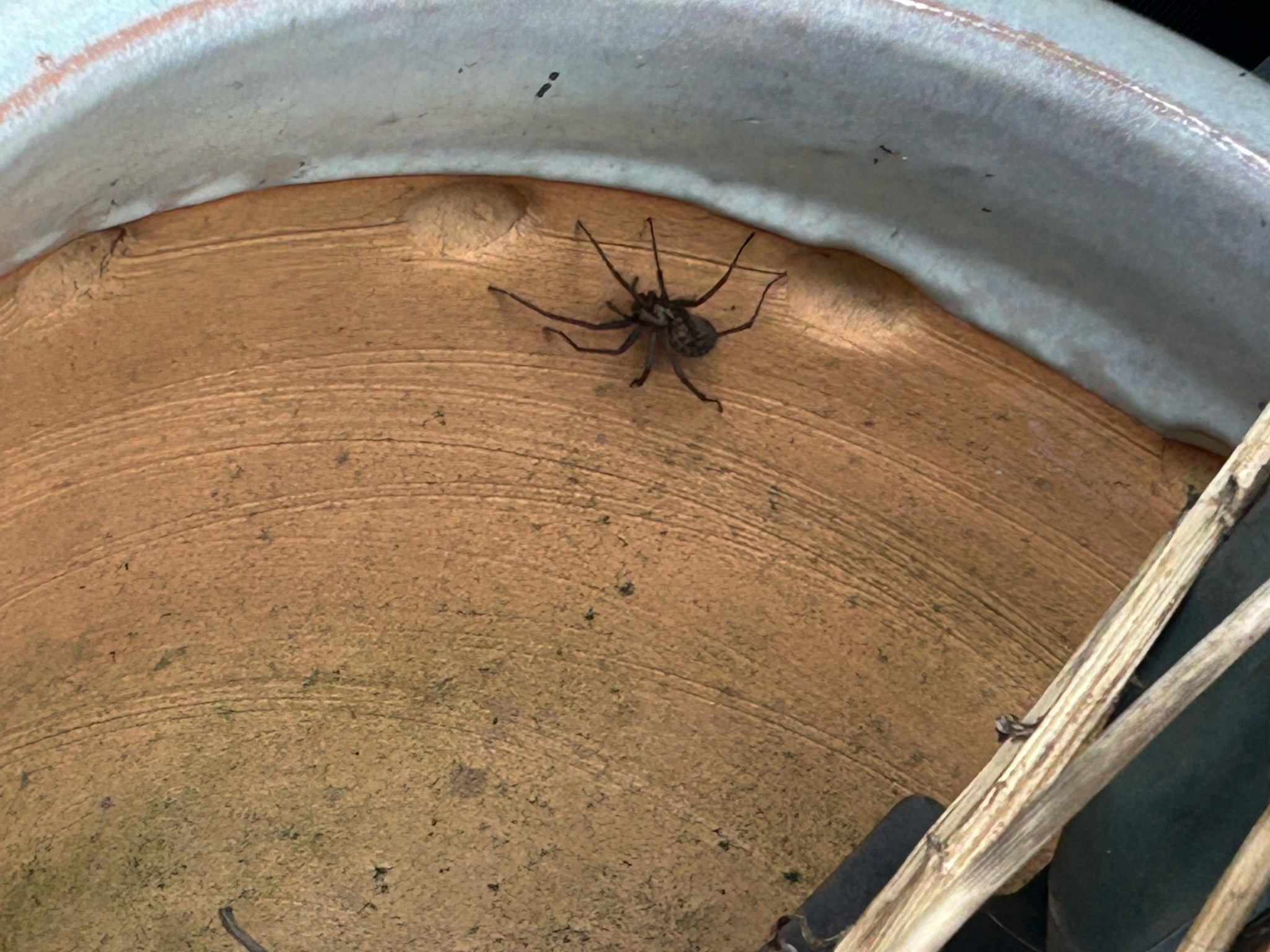
Community identification
Giant House Spider
Eratigena duellica
- Order & Family
- Araneae: Agelenidae
- Size
- Body length is 10-18 mm for females; leg spans can reach up to 100 mm (4 inches).
Natural Habitat
Typically found indoors in dark, quiet corners like basements and sheds, as well as outdoors in crevices and leaf litter.
Diet & Feeding
Carnivorous; it feeds primarily on flies, beetles, moths, and other small household insects.
Behavior Patterns
Funnel-web weavers that wait in a non-sticky sheet web; they are among the fastest spiders and are primarily active at night.
Risks & Benefits
Benefits the ecosystem by controlling pest populations; they are generally harmless to humans as they are shy and their venom is not medically significant.