
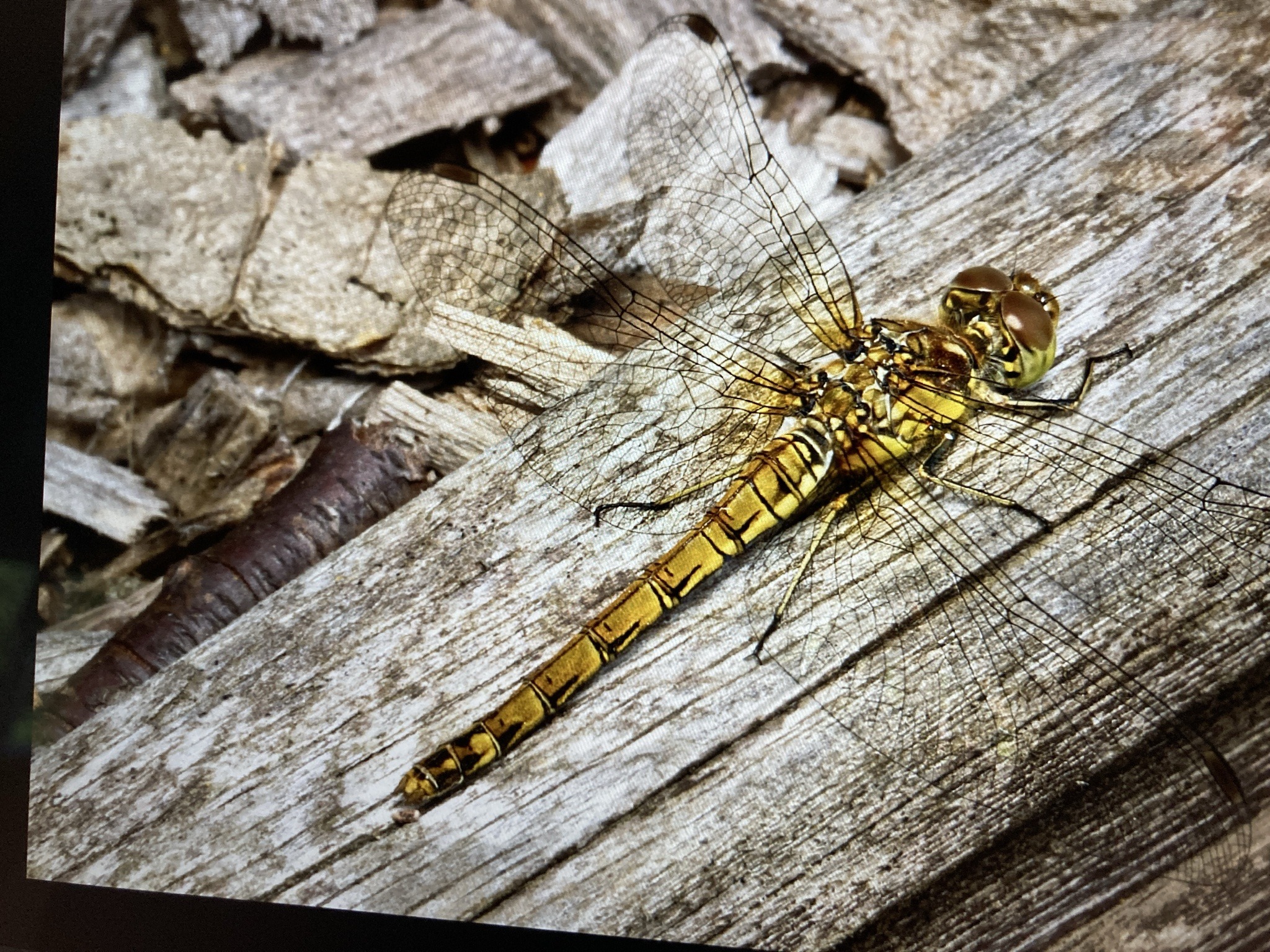
Community identification
Dragonfly (likely a clubtail)
Gomphidae, likely Gomphus sp.
- Order & Family
- Odonata; Gomphidae
- Size
- Typically 35–65 mm (1.4–2.6 in) long, depending on species.
Natural Habitat
Adults frequent sunny woodland edges, meadows, and stream or river margins; larvae develop buried in sediment in freshwater habitats.
Diet & Feeding
Adults are aerial predators that catch mosquitoes, flies, and other small flying insects; aquatic larvae prey on insect larvae, small crustaceans, and tadpoles.
Behavior Patterns
Adults patrol low over ground or water and often perch on logs or rocks. Immature aquatic larvae undergo incomplete metamorphosis, then emerge and molt into winged adults.
Risks & Benefits
Harmless to people and valuable predators of mosquitoes and other insects. Their presence often indicates relatively healthy freshwater ecosystems.