
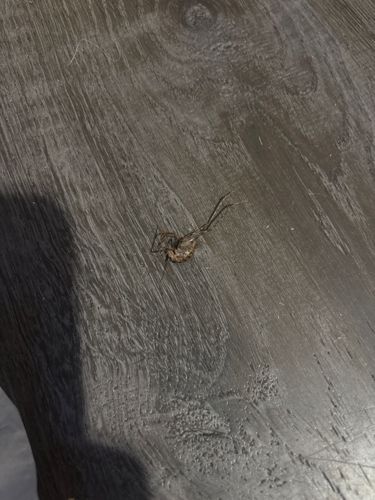
Community identification
Camel Cricket
Diestrammena asynamora
- Order & Family
- Orthoptera: Rhaphidophoridae
- Size
- 13 to 25 mm (0.5 to 1 inch) in body length, excluding the long legs and antennae.
Natural Habitat
Damp and dark areas such as basements, crawl spaces, caves, and under mulch or rotting logs outdoors.
Diet & Feeding
Omnivorous scavengers; they eat organic debris, fungi, plant matter, and sometimes other insects or paper products.
Behavior Patterns
They are nocturnal and known for their jumping ability. They do not chirp like other crickets and often congregate in large groups in moist areas.
Risks & Benefits
They do not bite or carry diseases but can be a nuisance indoors. They may damage fabrics or houseplants if populations are high; however, they benefit the ecosystem by breaking down organic matter.