
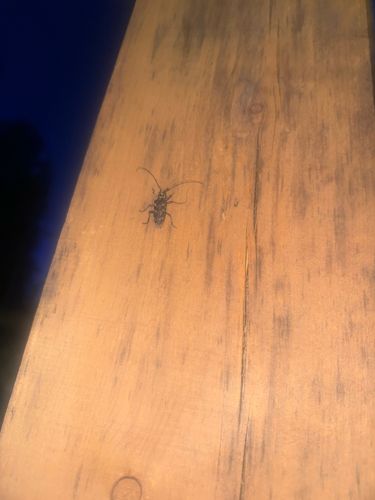
Longhorned Beetle, Sawyer Beetle
Cerambycidae (family)
- Order & Family
- Order: Coleoptera, Family: Cerambycidae
- Size
- Highly variable, typically from 3 mm to over 100 mm (0.1 to 4 inches), depending on the species. The specimen in the image appears to be in the moderate size range for this family.
Natural Habitat
Found in forested areas, woodlands, and anywhere trees are present. They are often associated with logging sites, sawmills, firewood piles, and dead or decaying trees. Some species can also infest wooden structures.
Diet & Feeding
Larvae primarily feed on wood (xylophagous). Different species specialize in dead, dying, or sometimes even living wood of various tree types (conifers or hardwoods). Adult beetles typically feed on pollen, nectar, sap, or sometimes leaves and bark, though some do not feed much as adults.
Behavior Patterns
Longhorned beetles lay eggs in crevices of trees or wood. Larvae bore into wood, often for extended periods (months to years), creating tunnels as they feed. This destructive larval stage is responsible for much of their impact. Adults are typically active during warmer months, and many species are nocturnal or crepuscular, attracted to lights.
Risks & Benefits
Potential risks include significant economic damage to forests due to larval boring, which can weaken or kill trees and devalue timber. They can also infest wooden structures and firewood. Benefits include their role as decomposers, breaking down dead wood and contributing to nutrient cycling in ecosystems. Some species are also important pollinators.